Orlando
Novel by Virginia Woolf
Adaptation by Sarah Ruhl
Creative Team
Director: Claudia René Wier
Assistant Director: Gabriela Trigo-McIntyre
Media Design: Alex Oliszewski
Scenic Design: Kaitlyn Crosby
Lighting Design: Sarah Herkert
Costume Design: Rebecca Turk
Sound Design: Ruth Luketic
Dramaturg: Iz Gibson
Production Stage Manager: Ellie Price
Production Technical Director: Chad R. Mahan
Technical Director: Chris Zinkon
OSU, Department of TFMA
Proscenium Theatre
2025
Design Overview
Our production of Orlando, Sarah Ruhl’s stage adaptation of Virginia Woolf’s novel, called for a visual environment that could shift fluidly across centuries, geographies, and identities without losing cohesion or emotional depth. Our team approached this by merging scenic and projection design into a single responsive system that could keep pace with the play’s rapid changes in location and tone, while reinforcing its poetic structure.
Research Focus
This production provided a focused opportunity to advance my ongoing research into integrative media systems for live performance. I established project-specific goals that included experimenting with AI-assisted image generation, exploring new features in Isadora 4 (especially Python scripting), and building technical bridges between media playback and the automation data network in TFMA’s newly outfitted Proscenium Theatre.
The core focus of this research was to maximize collaborative responsiveness: I built an interface that enabled live adjustments during technical rehearsals, allowing the team to easily participate in the refinement of media elements and moments in real time. This capability proved critical given the compressed three-day window to program and integrate media into a fast-paced, two-hour performance.
Outcome
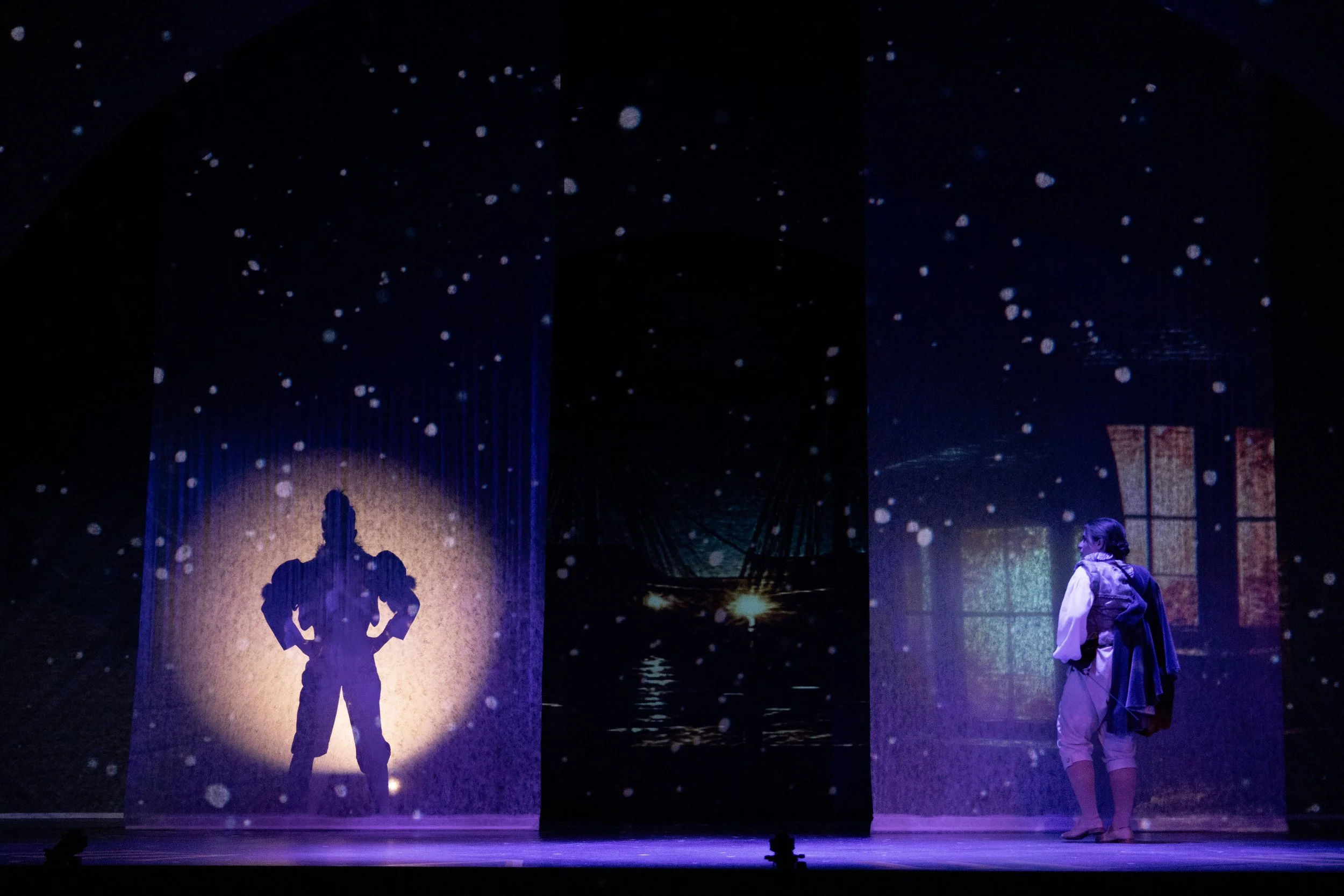
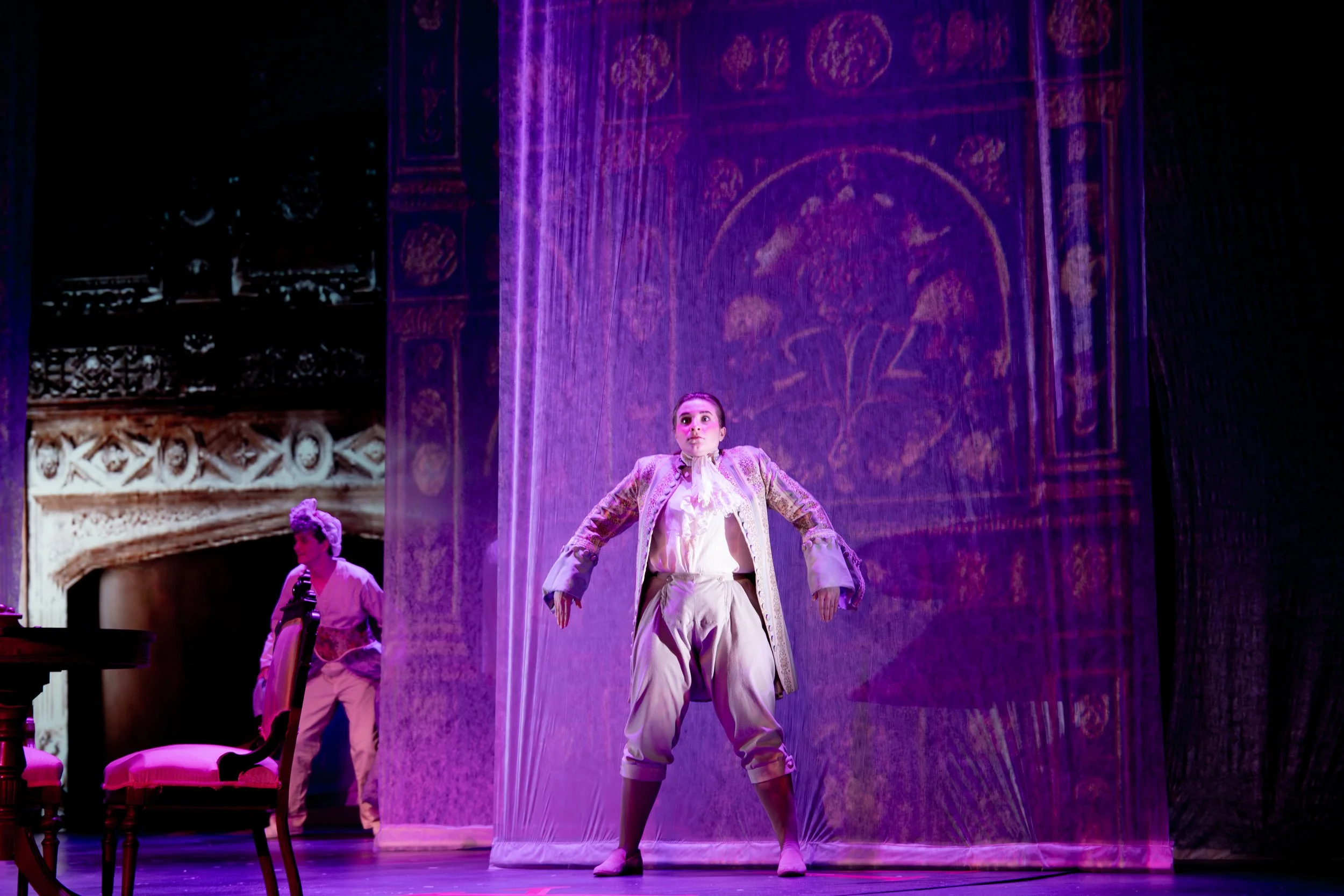
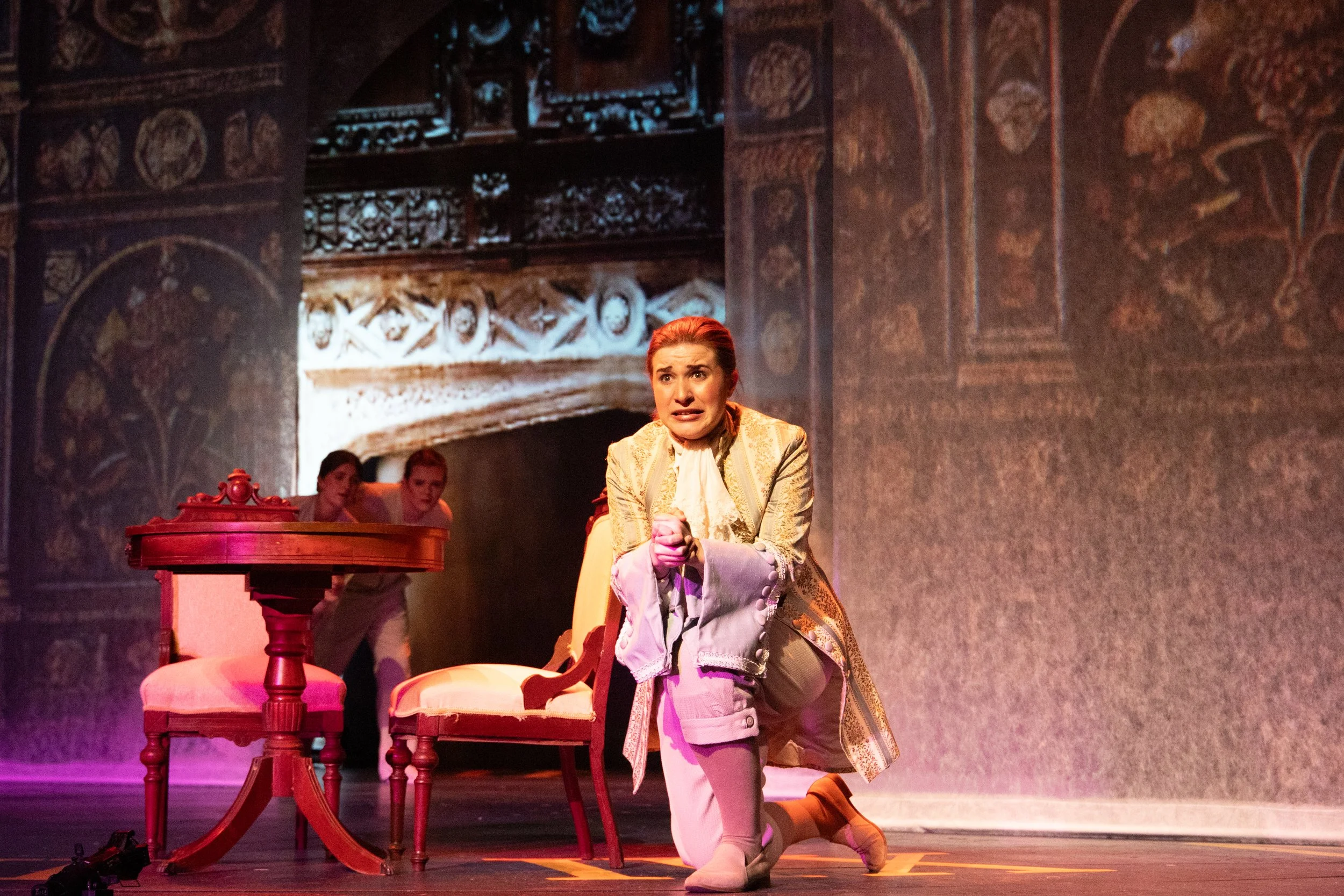
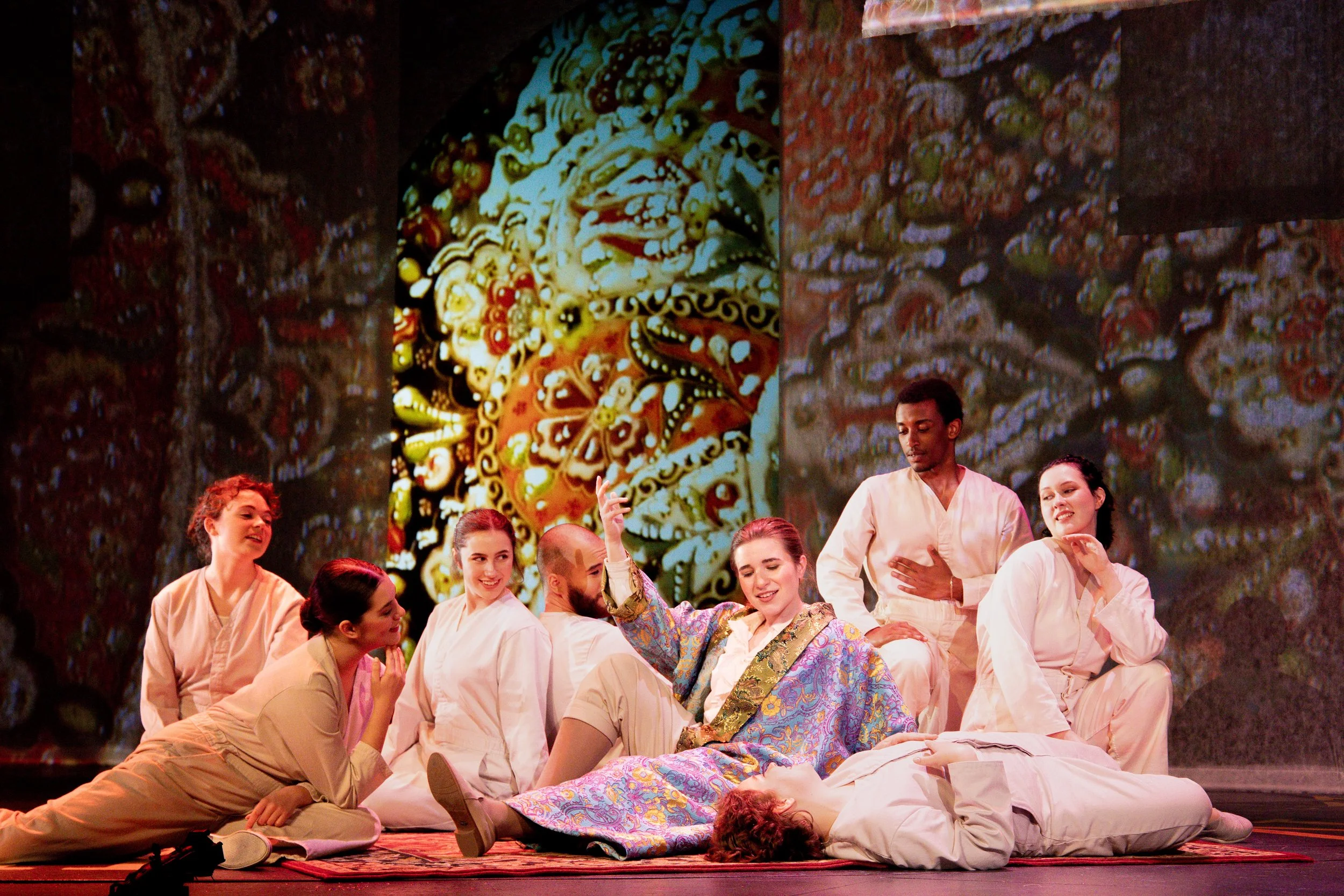
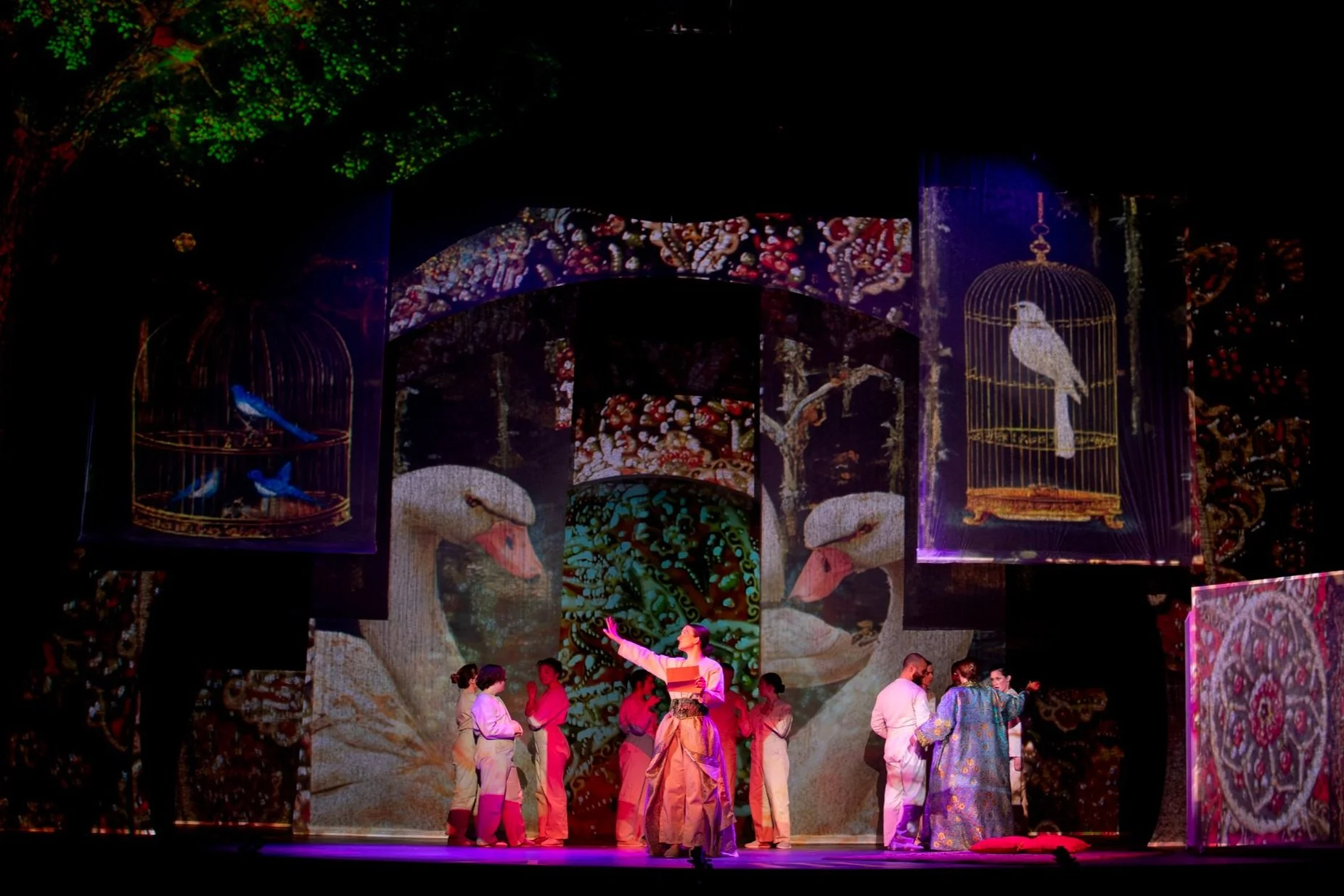
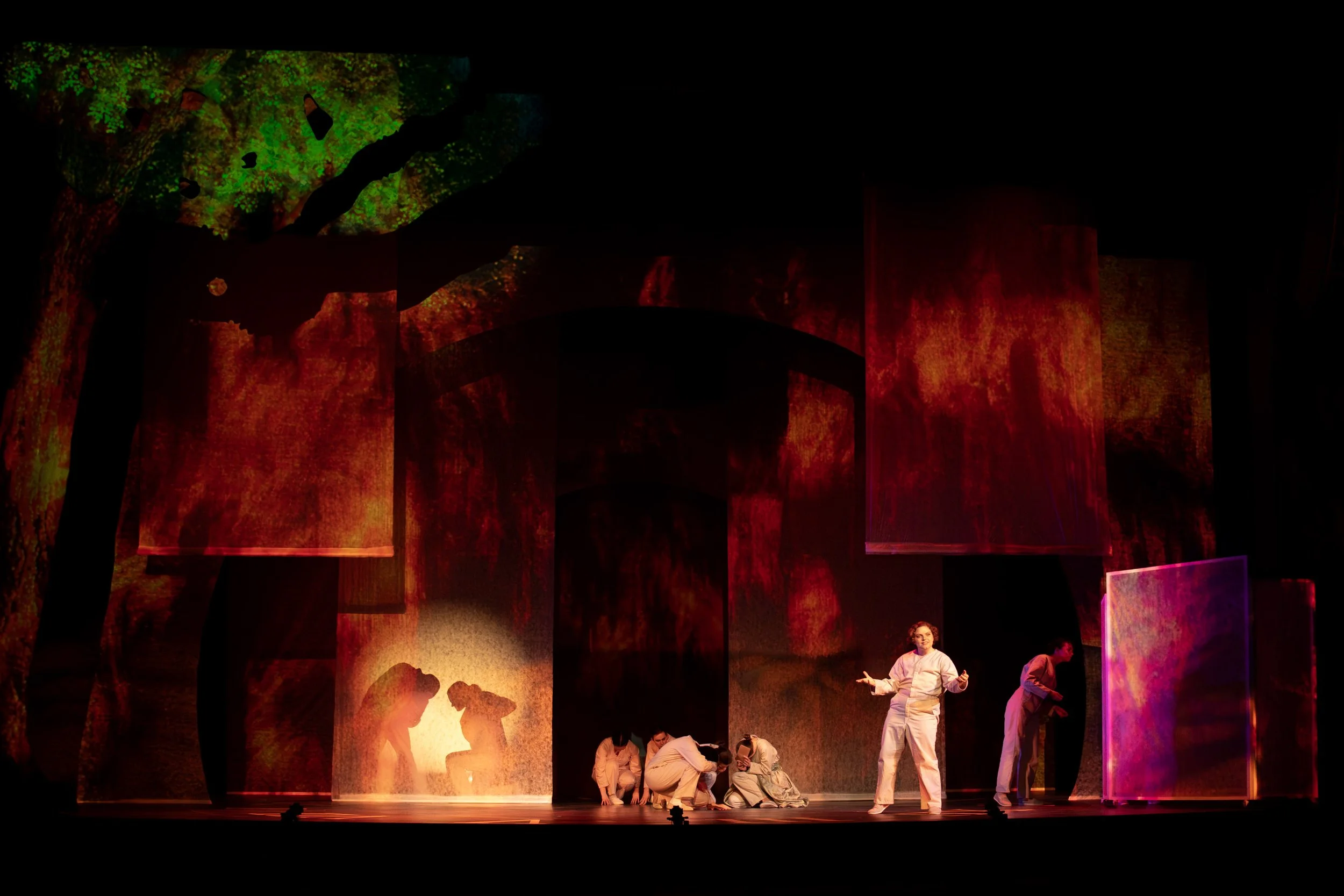
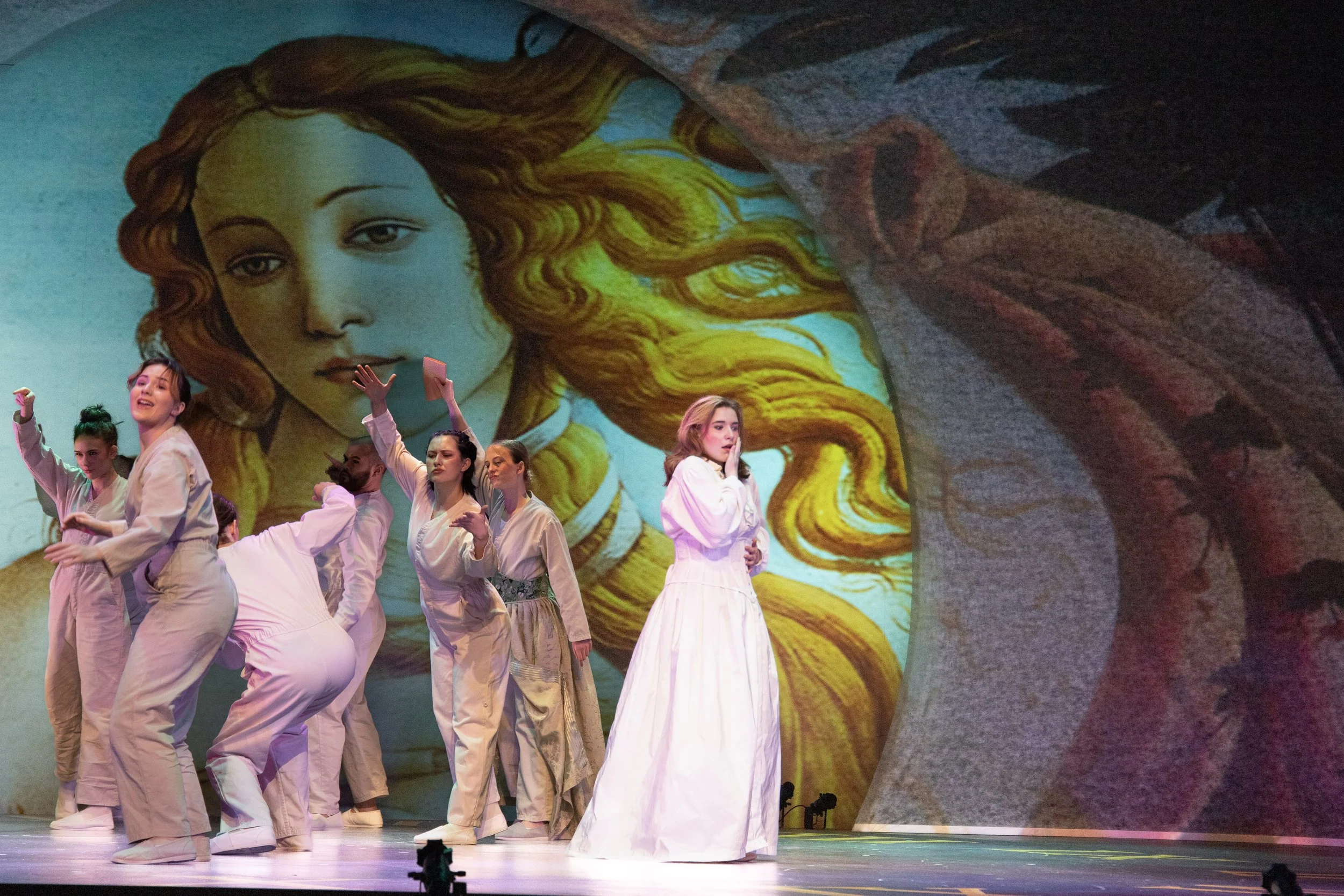
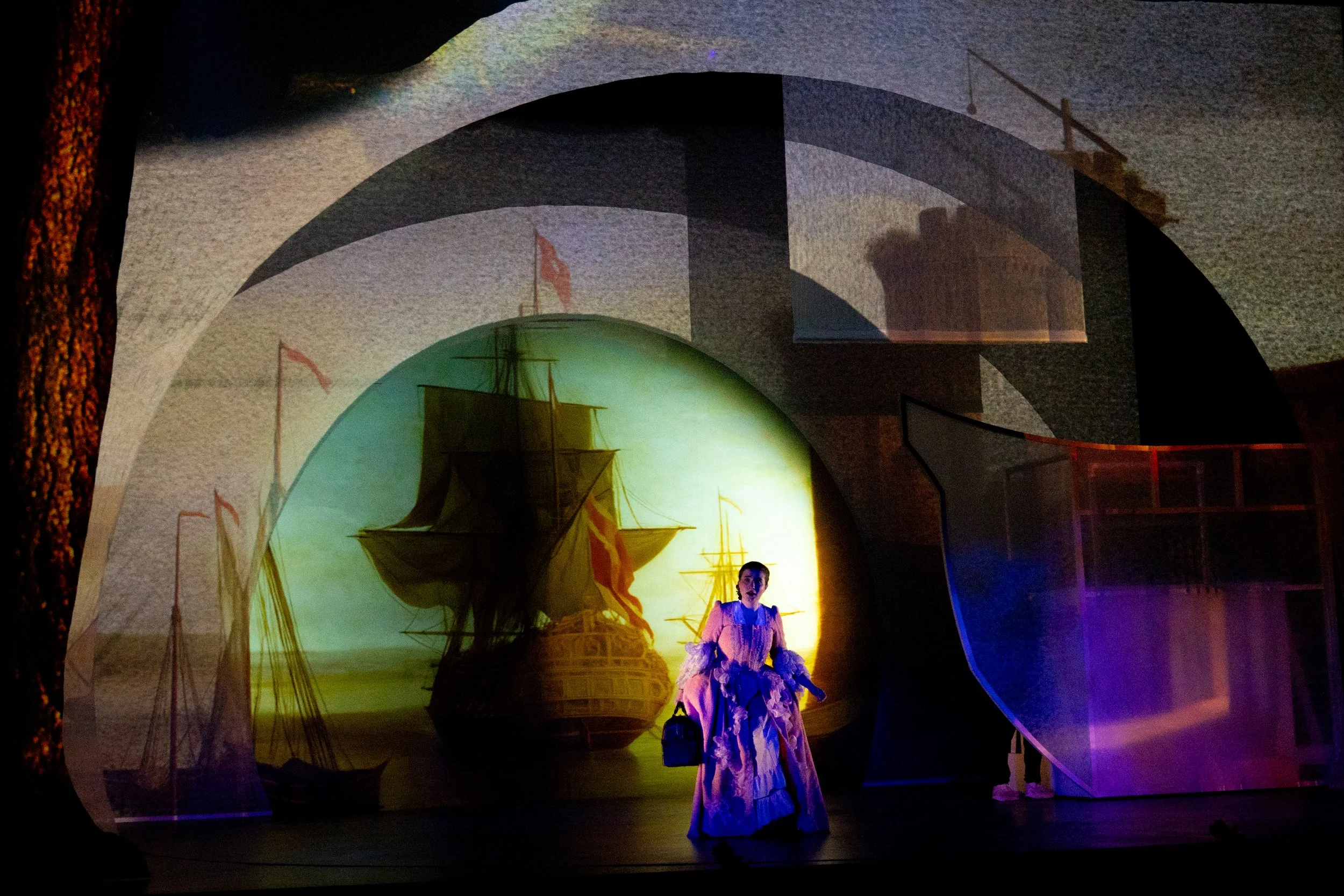
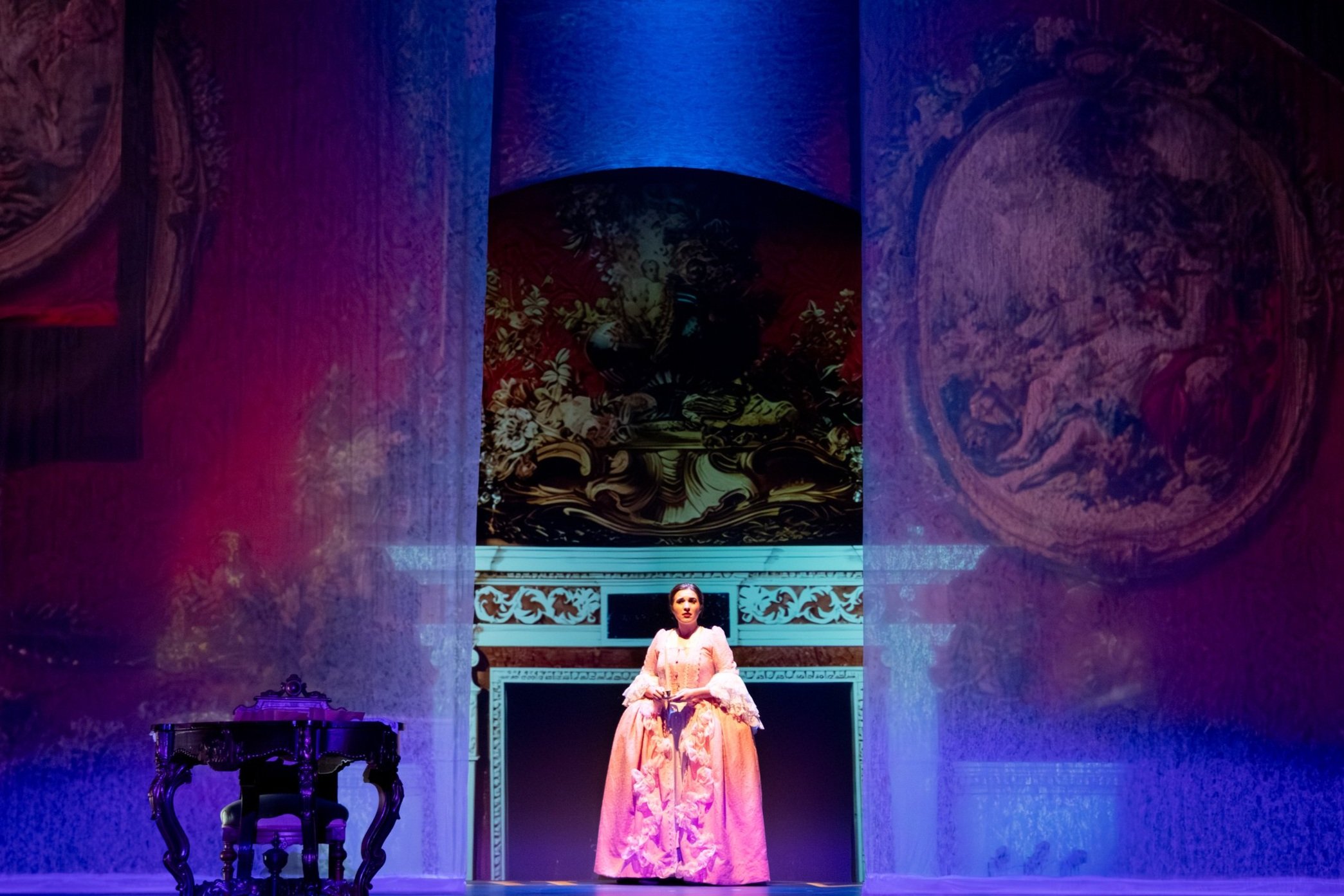
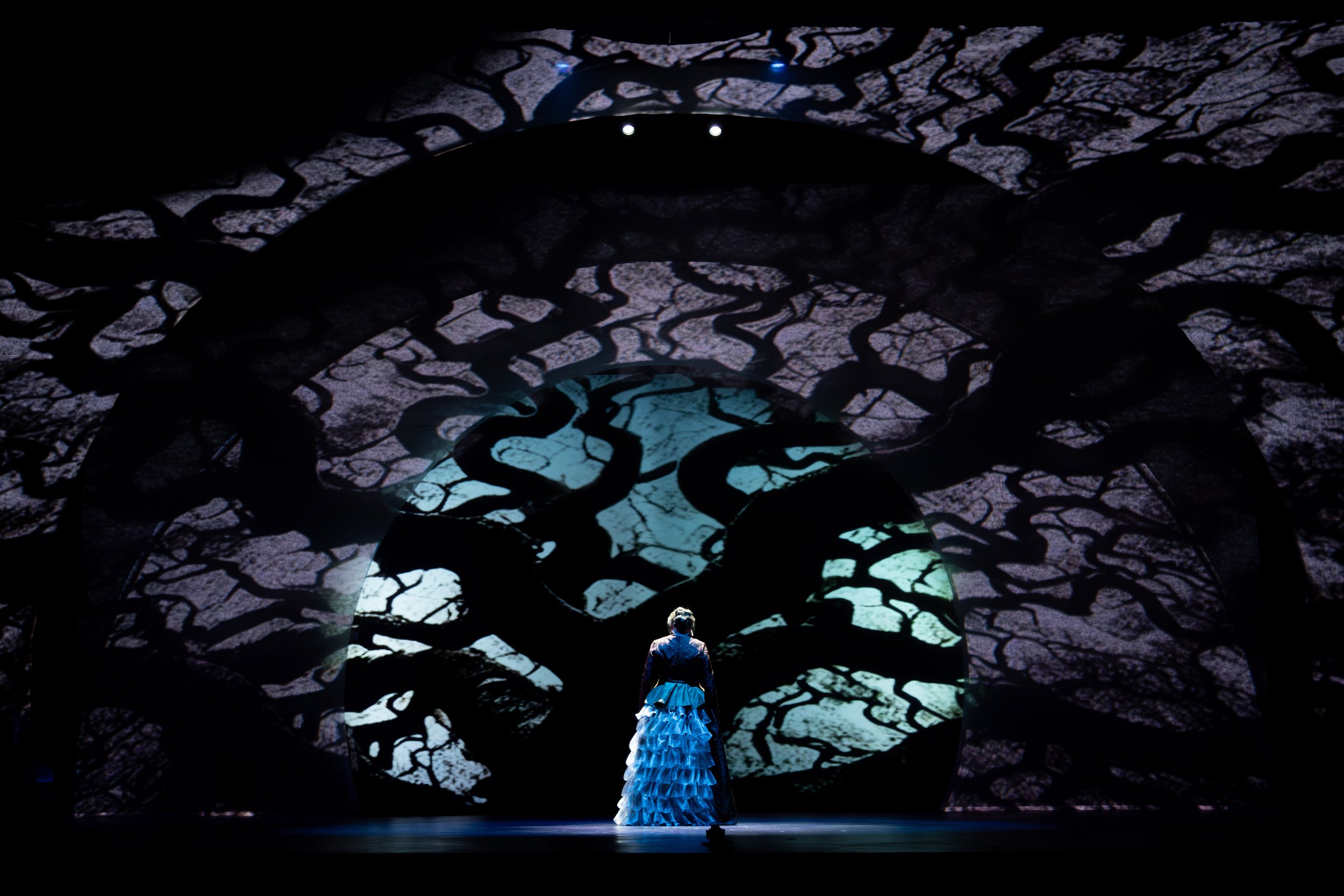
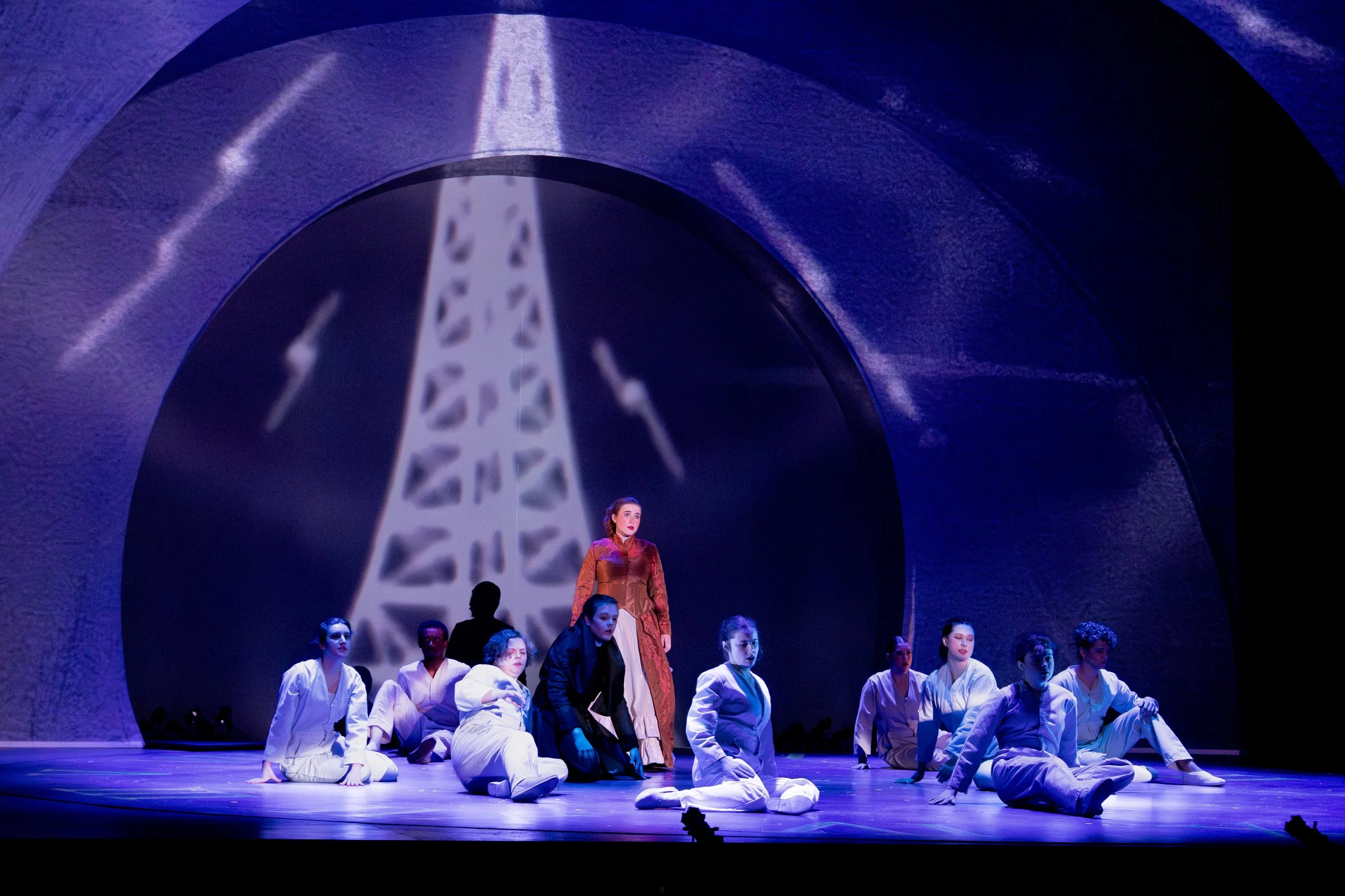
To support the demands of this production, I designed and programmed a custom projection-mapping system in Isadora. This system allowed me to place, scale, and blend content fluidly across both fixed and automated scenic units. The final design consisted of seven distinct mapped areas, combining off-center two-channel rear projection with targeted front projection.
Over the course of the production, I created more than forty distinct visual environments and programmed over two hundred media cues. The system supported quick, expressive transitions and allowed the show’s expansive timeline and layered narrative to unfold with visual clarity.
I was successful in engaging with Orlando not just as a mainstage production, but also as a site of active research where new tools, systems, and design processes were tested under the real-world conditions of live performance. In turn, I’m applying these lessons and experiences to further develop the courses I teach at OSU, particularly Fundamentals of Media Design and Devising Experiential Media Systems courses. This work reflects my ongoing commitment to media design as a creative research practice, grounded in dramaturgy, built through collaboration, and continually evolving alongside new technologies.
-
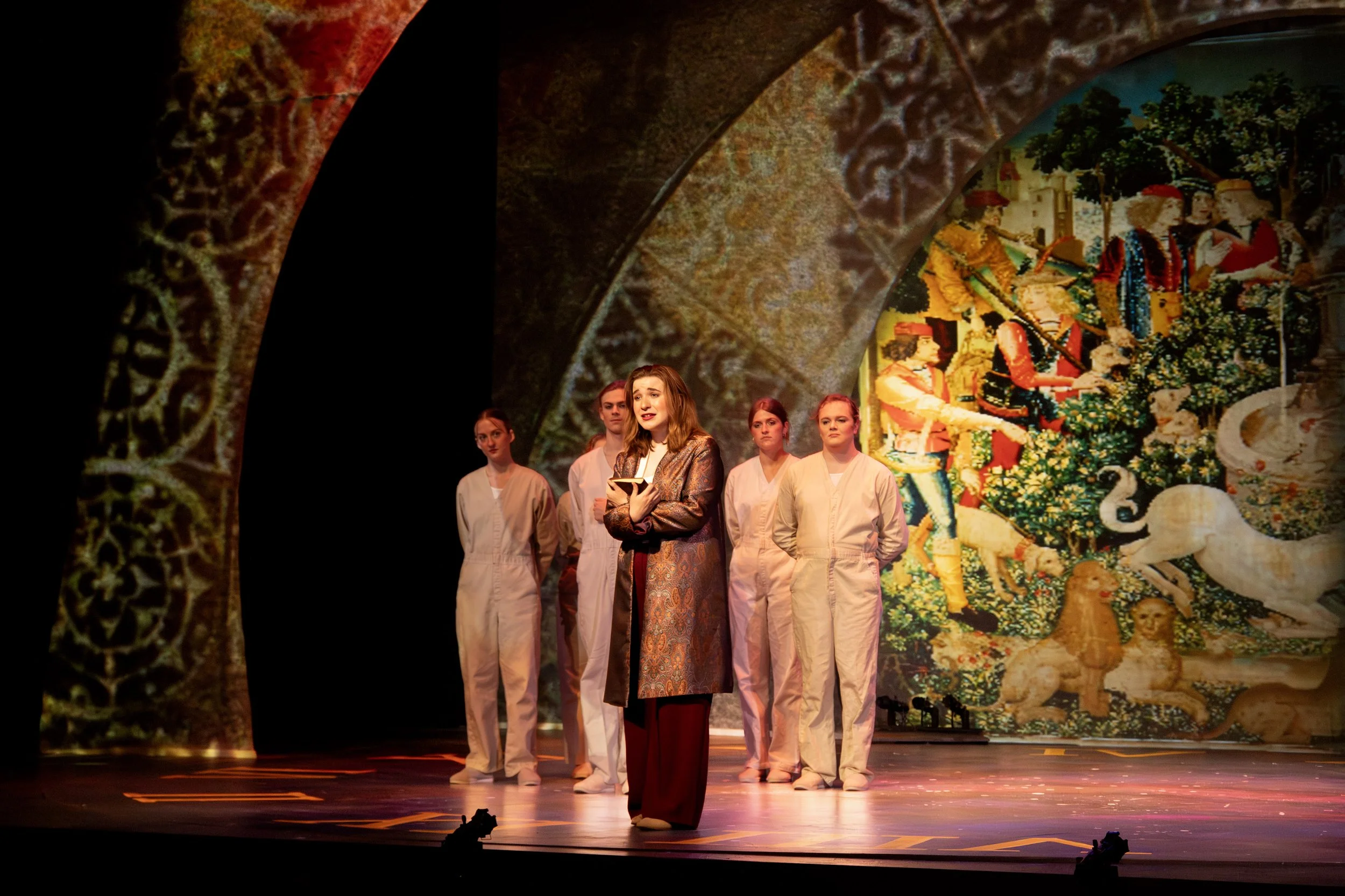
![Performance photo from Orlando. Photo by Maranda DeBusk.]()
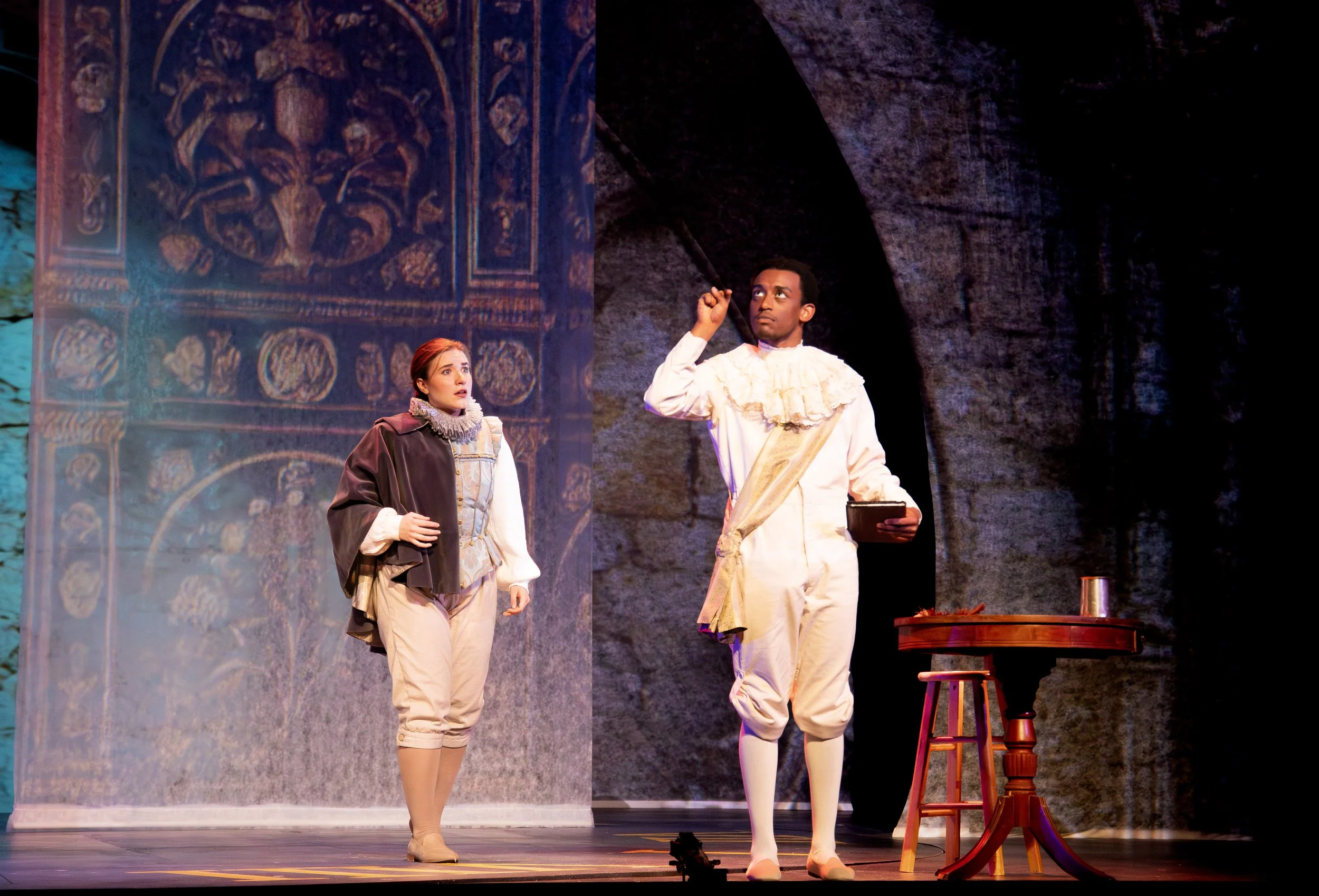
Orlando is going to write a poem!
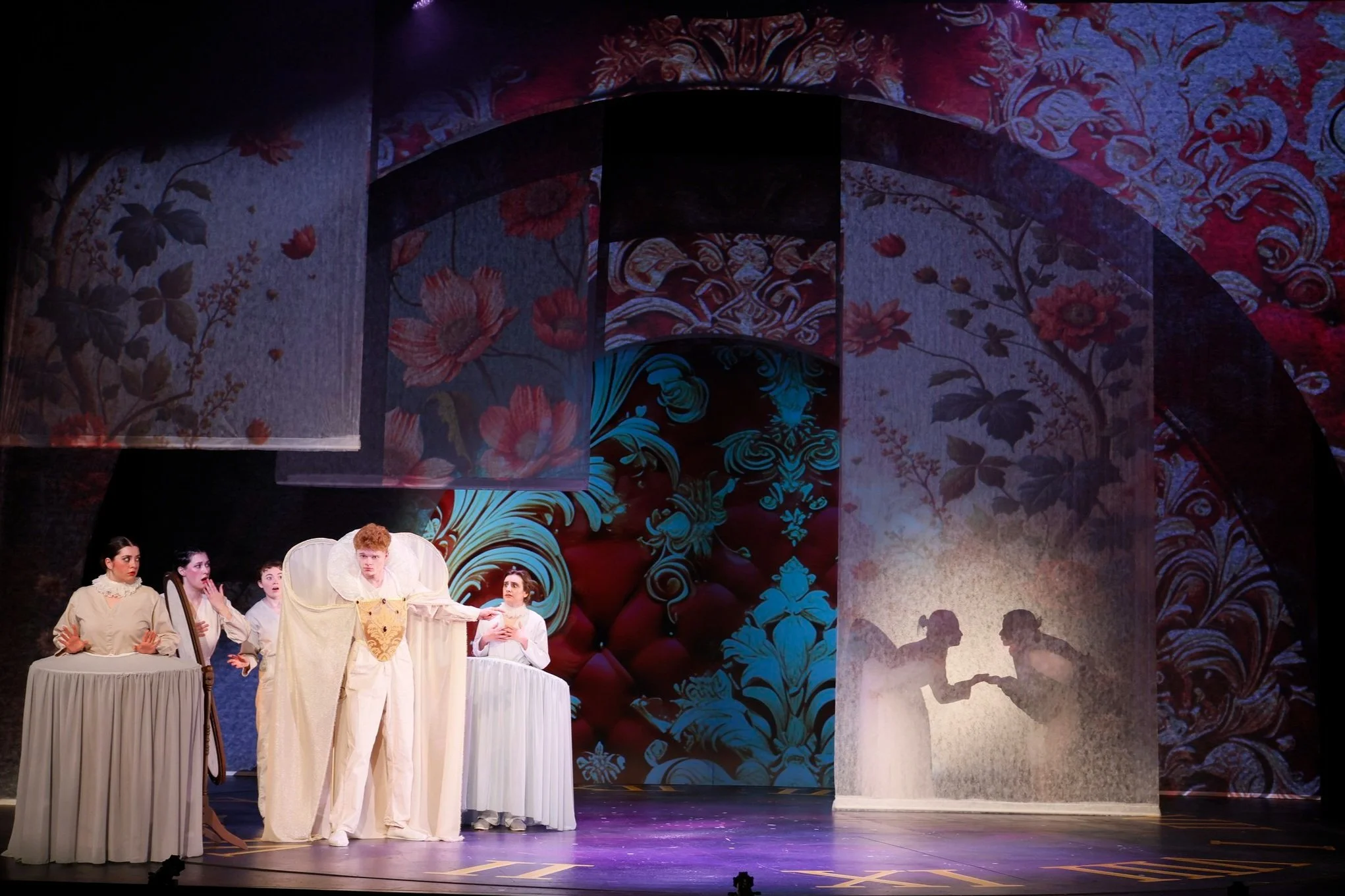
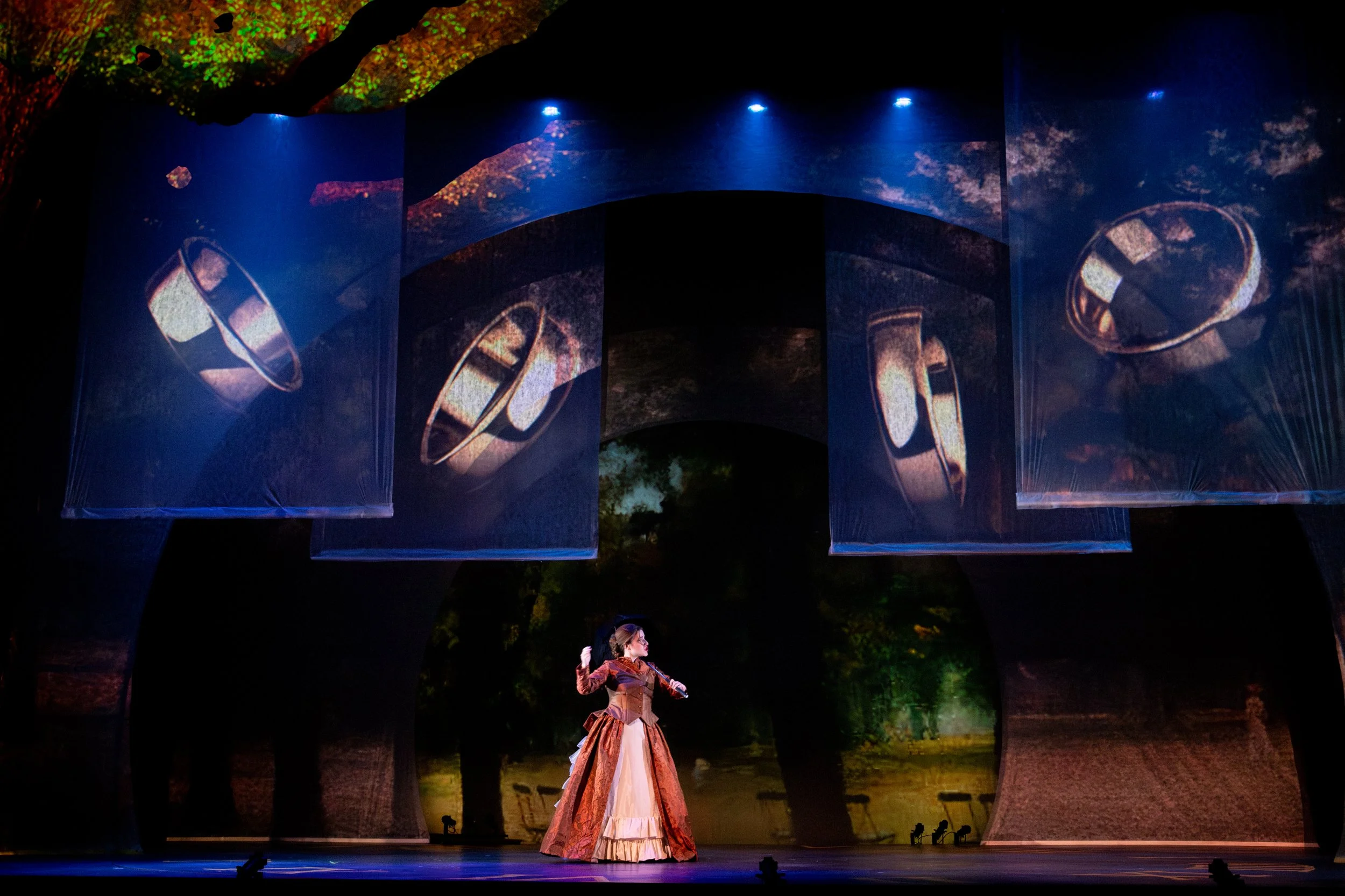
The upstage surface features rear projection, while the mid-stage and downstage portal screens utilize front projection.
Photo by Maranda DeBusk
-
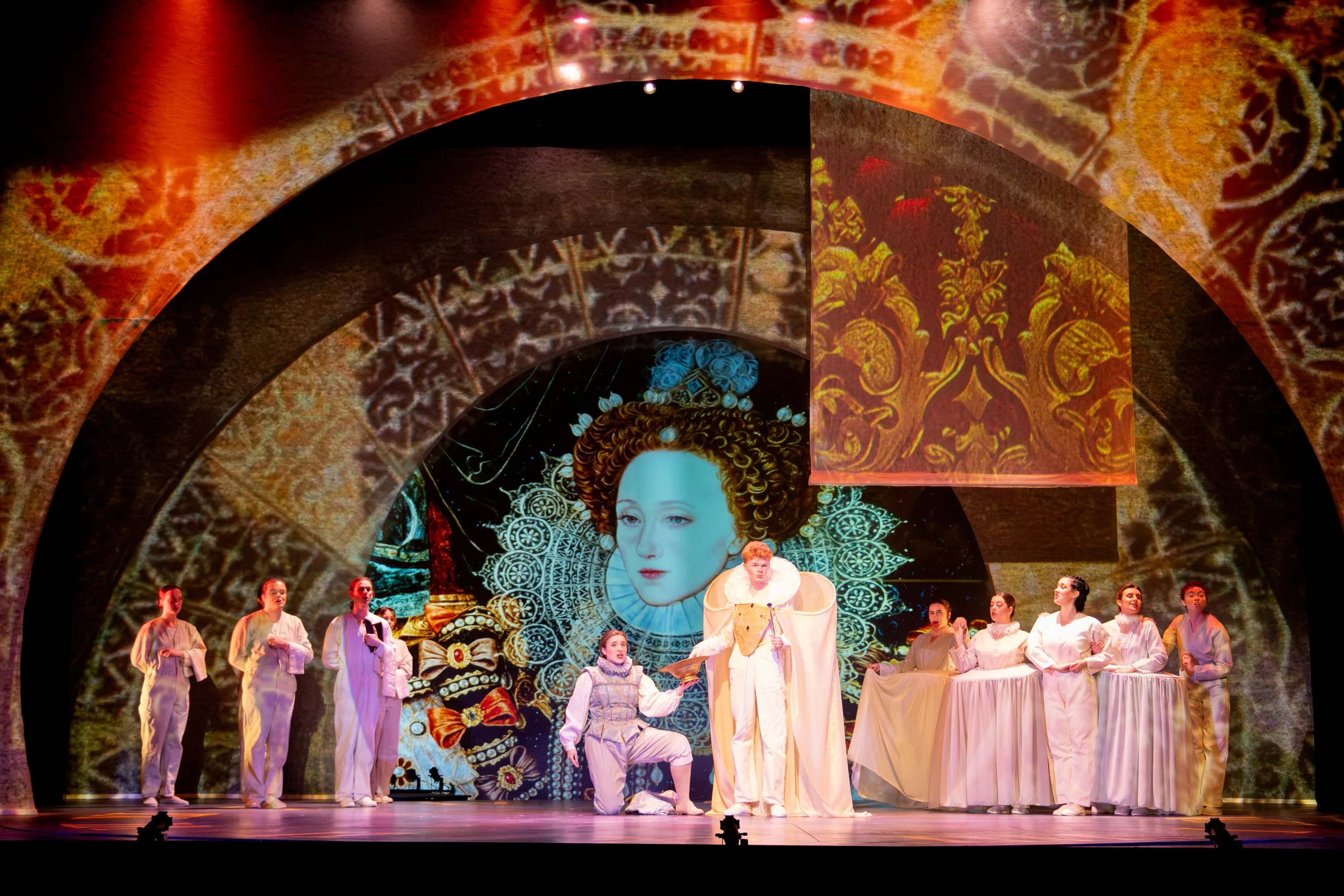
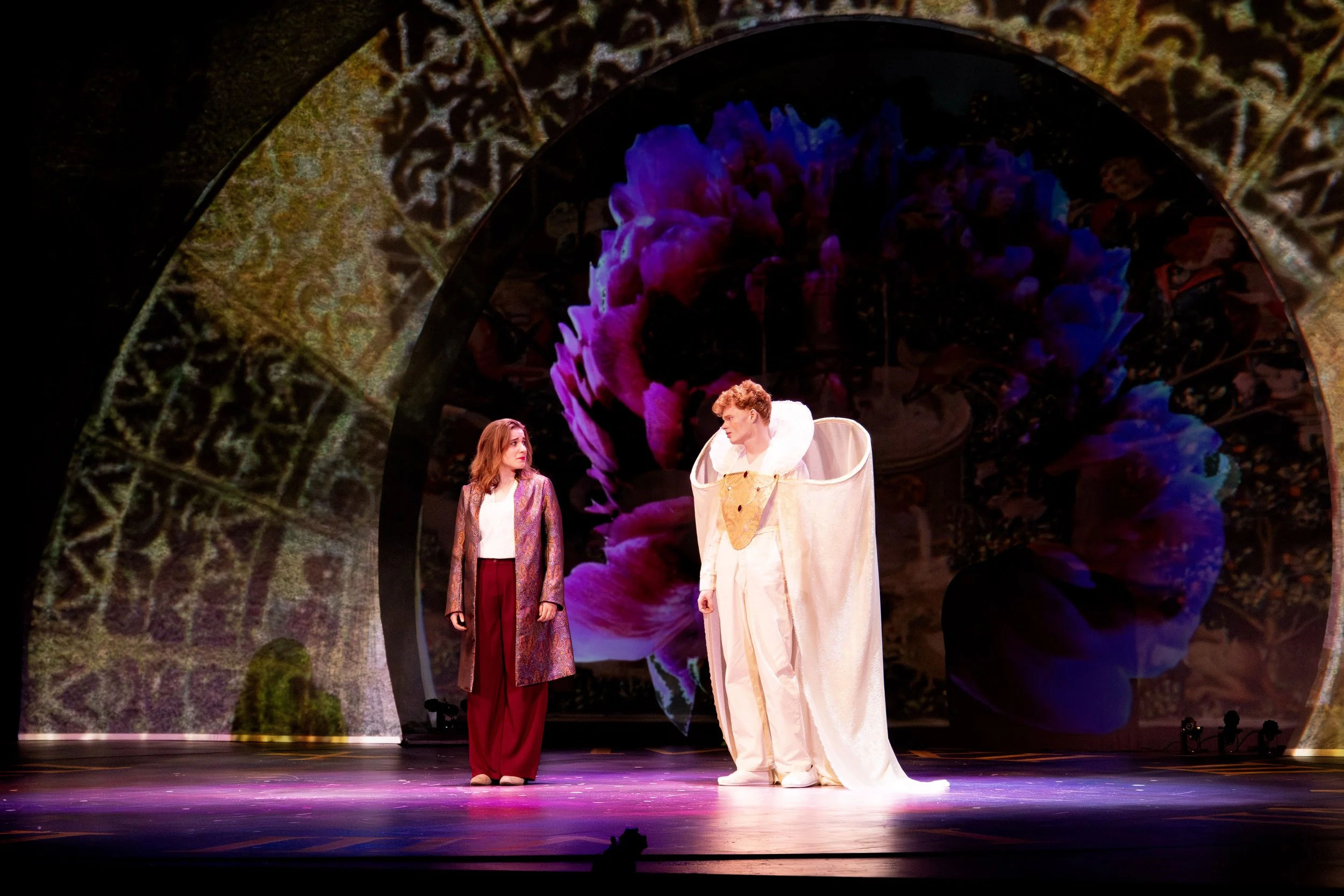
![Orlando offers a bowl of rose water to the Queen. Orlando production photo. Photo by Maranda DeBusk.]()
Orlando offers a bowl of rose water to the Queen.
Photo by Maranda DeBusk
-
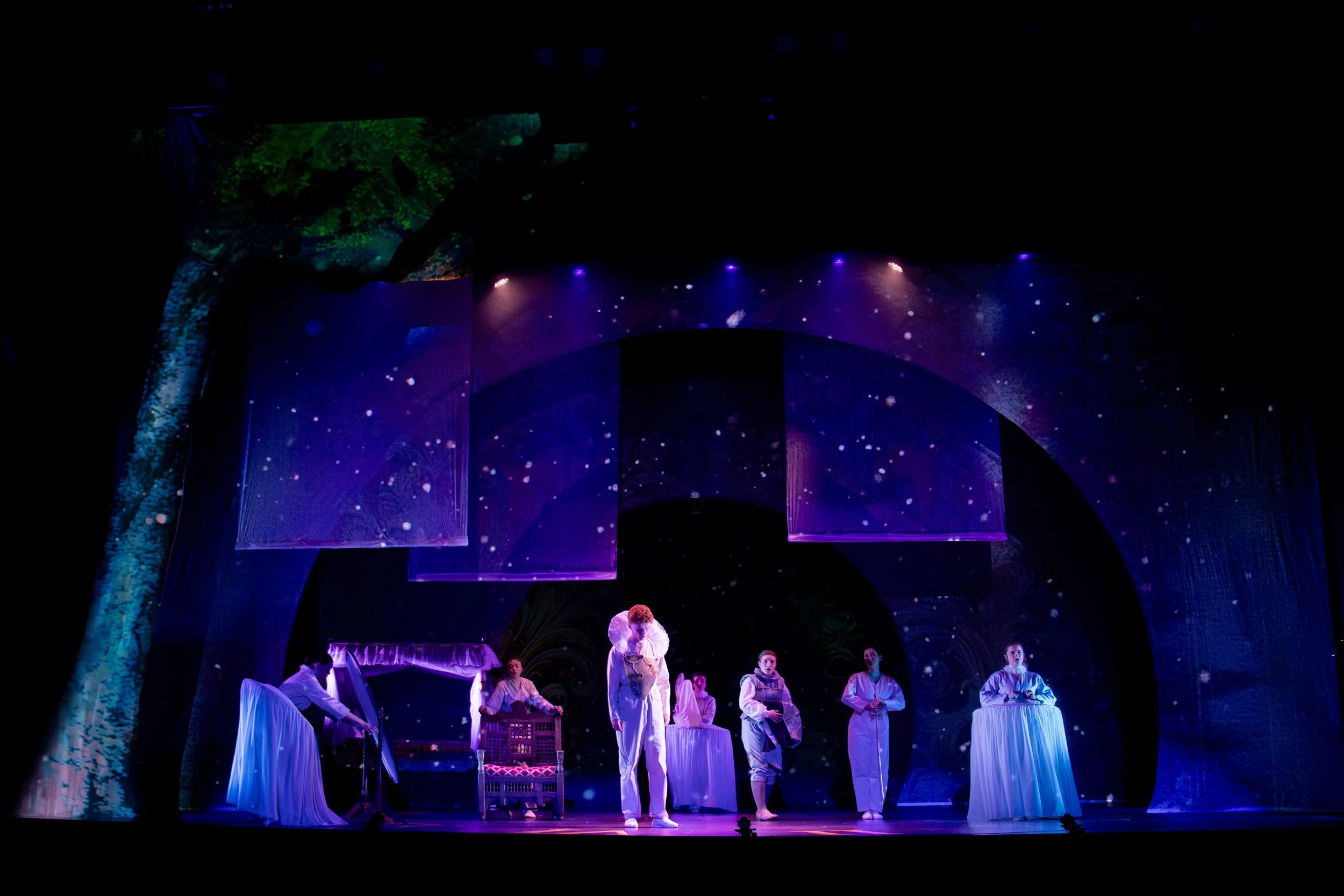
![The beginning of the Great Frost. Orlando production photo. Photo by Maranda DeBusk.]()
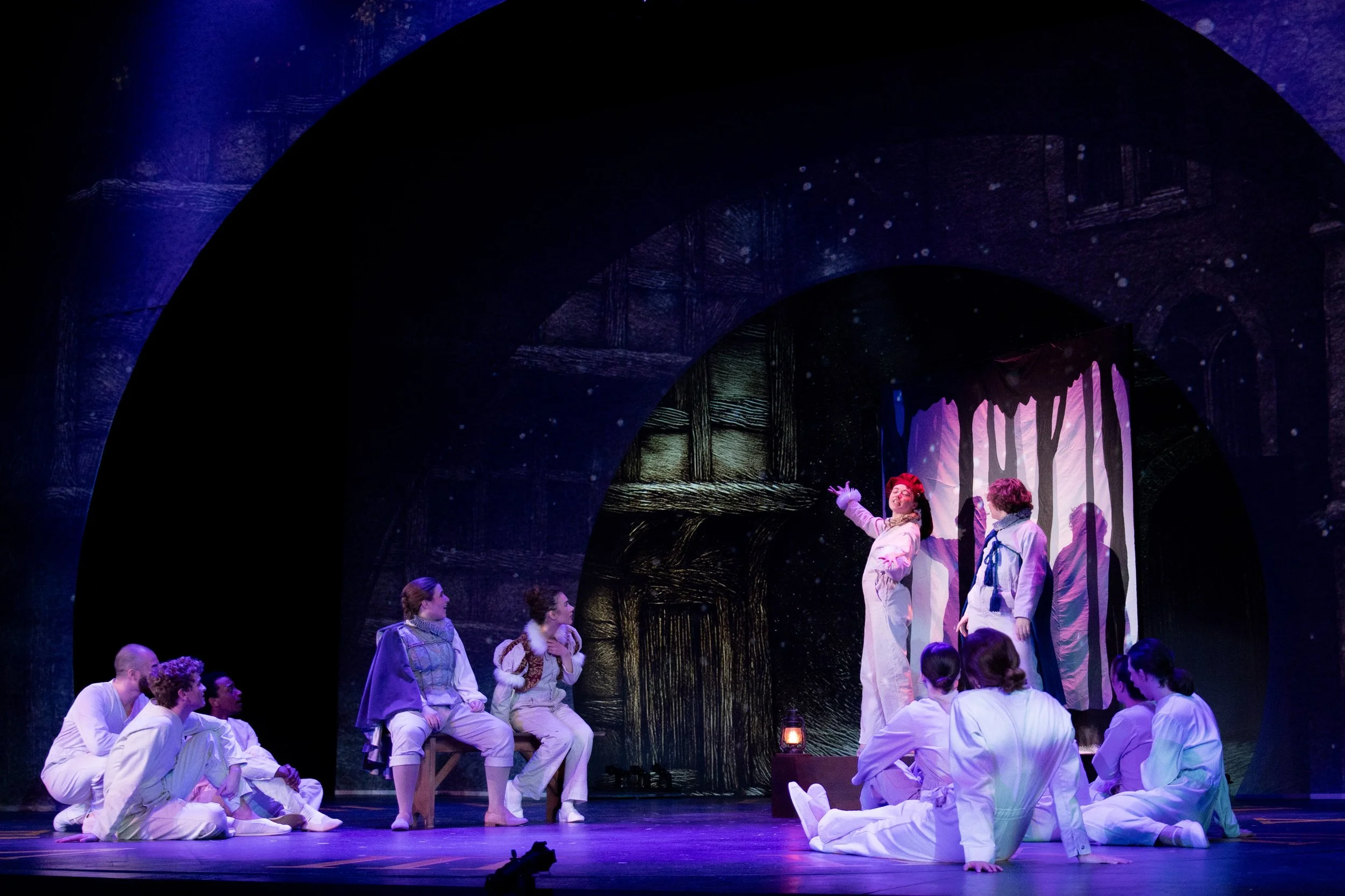
The beginning of the Great Frost.
Photo by Maranda DeBusk
-
![Orlando show photo. Photo by Jay LaPrete]()
Orlando is unfaithful to the Queen
Photo by Maranda DeBusk
-
![A Russian Princess. Orlando production photo. Photo by Maranda DeBusk.]()
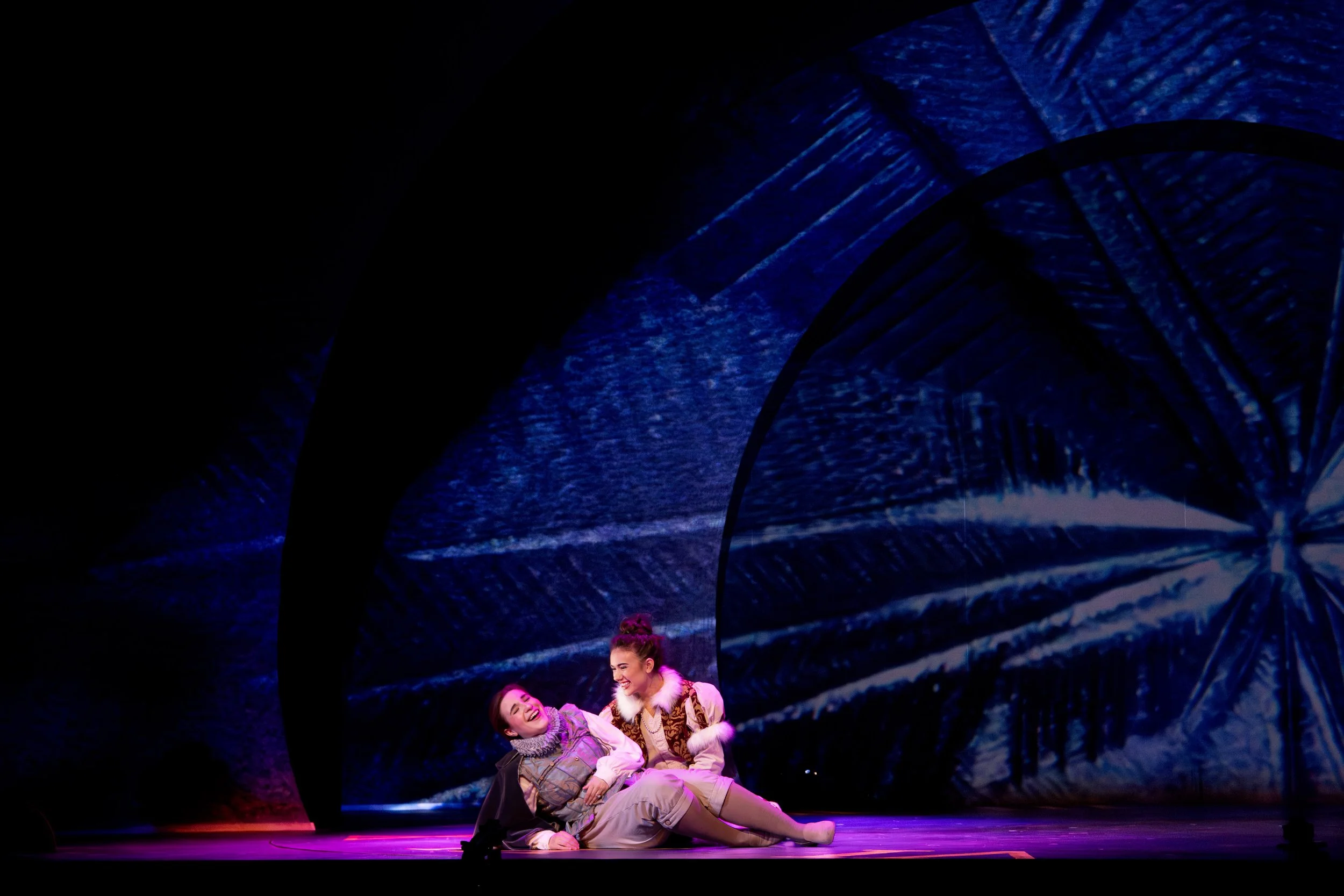
A Russian Princess beguiles Orlando.
Photo by Maranda DeBusk
-
![A play within a play. Photo by Maranda DeBusk]()
Orlando and the Princess enjoy a moment of street theatre.
Photo by Maranda DeBusk
-
![Production photo from Orlando]()
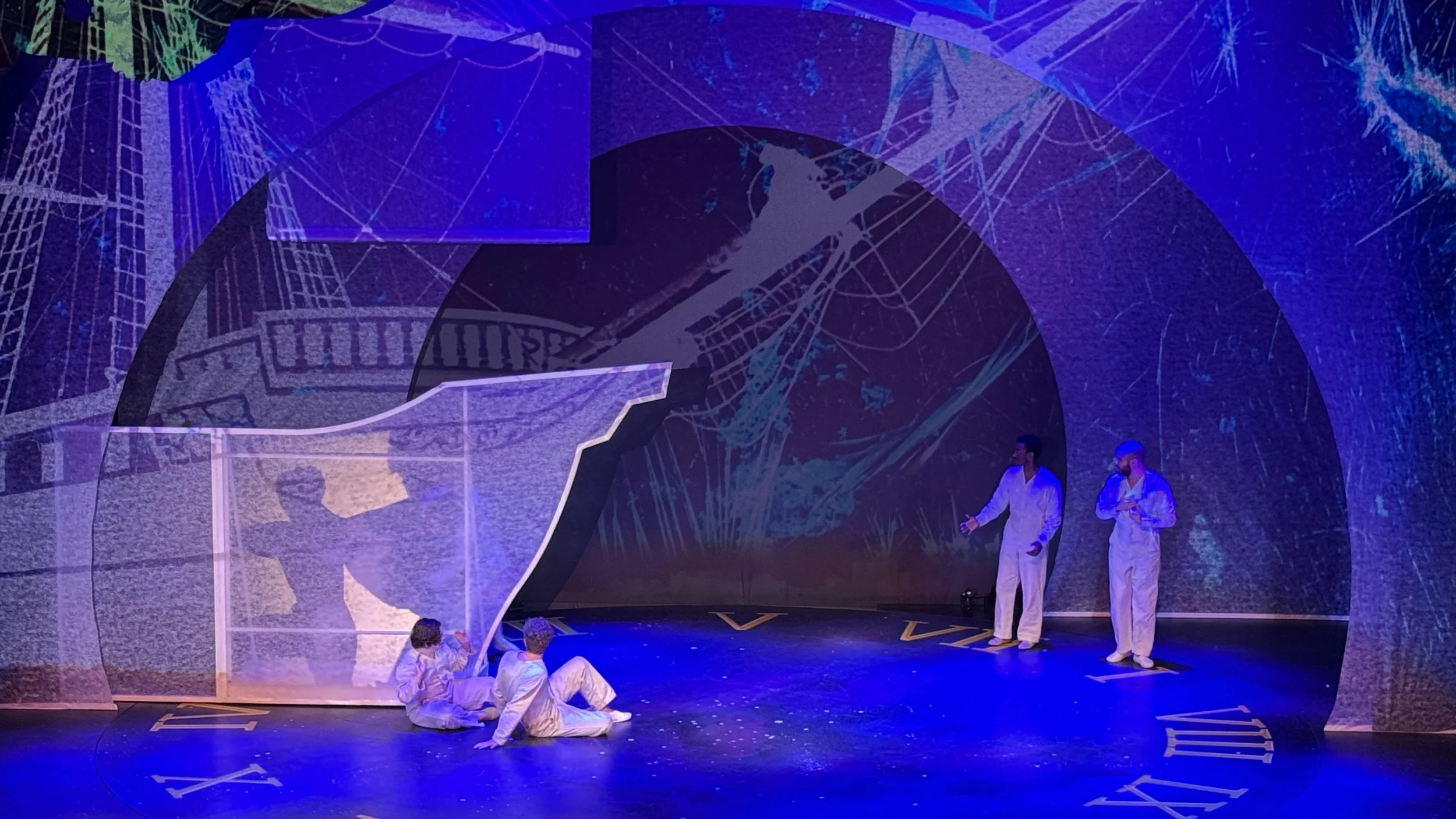
The Russian Princess betrays Orlando’s love.
Photo by Alex Oliszewski
-
![Orlando production photo. Photo by Maranda DeBusk.]()
The Princess leaves Orlando waiting on the dock.
Photo by Maranda DeBusk
-
![Orlando production photo by Maranda DeBusk]()
Orlando hides from the Dutchess.
Photo by Maranda DeBusk
-
![Photo by Maranda DeBusk]()
Please! Send me to Constantinople!
Photo by Maranda DeBusk
-
![Constantinople. Production photo from Orlando. Photo by Maranda DeBusk.]()
Constantinople
Photo by Maranda DeBusk
-
![Orlando throws a grand party. Production photo of Orlando. Photo by Maranda DeBusk]()
Orlando throws a grand party.
Photo by Maranda DeBusk
-
![Constantinople burning. Orlando production photo. Photo by Maranda DeBusk]()
Orlando sleeps as Constantinople burns.
Photo by Maranda DeBusk
-
![He was a woman. Orlando production photo. Photo by Maranda DeBusk.]()
Orlando wakes up unexpectedly, as a woman.
Photo by Maranda DeBusk
-
![Orlando returns home. Photo by Maranda DeBusk.]()
Orlando returns to her homeland.
Photo by Maranda DeBusk
-
![It was the Spirit of the Age. Photo by Maranda DeBusk.]()
It was the Spirit of the Age.
Photo by Maranda Debusk
-
![Orlando performance photo by Maranda DeBusk]()
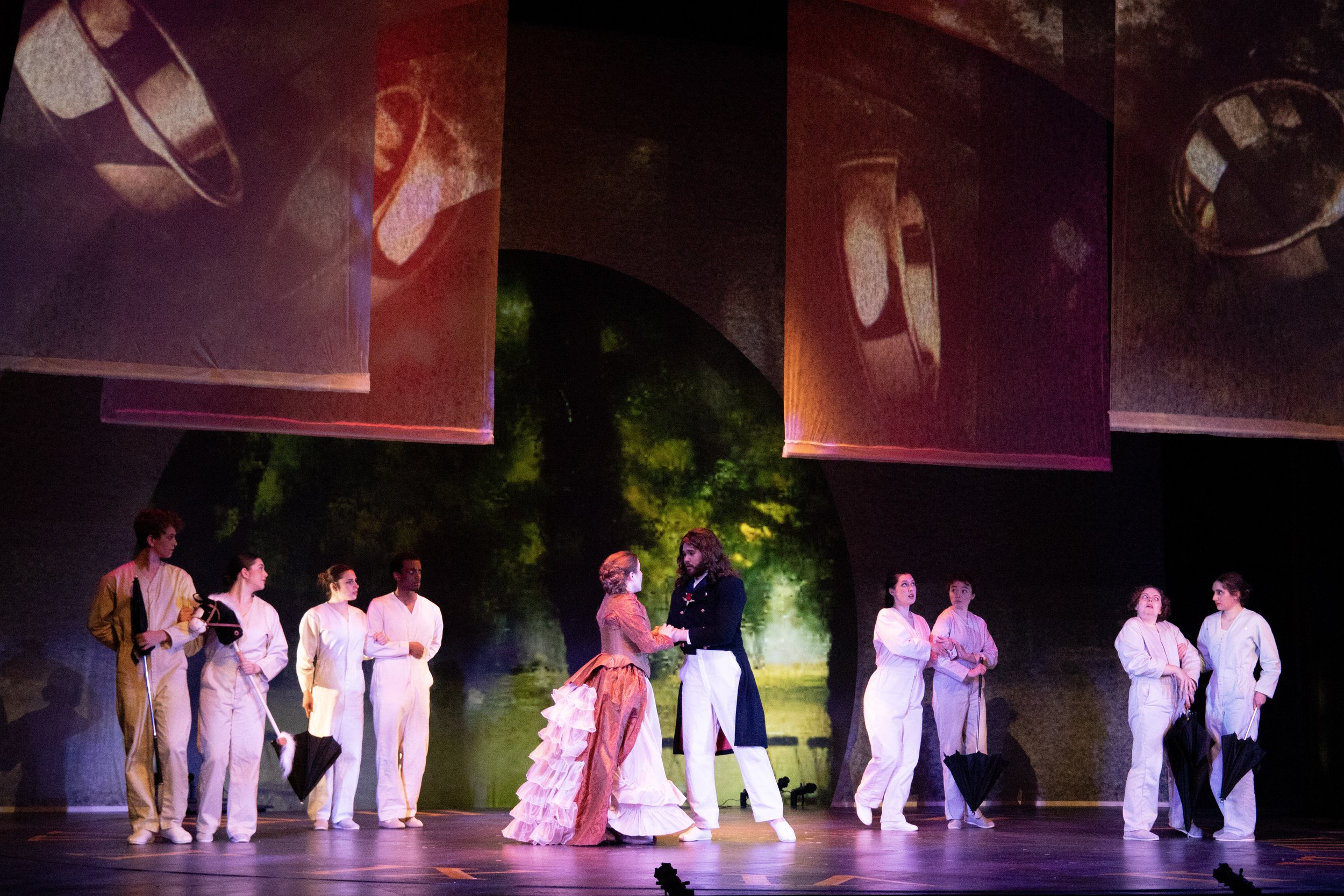
Orlando meets a beautiful man with long hair.
Photo by Alex Oliszewski
-
![Orlando performance Image. Photo by Maranda DeBusk.]()
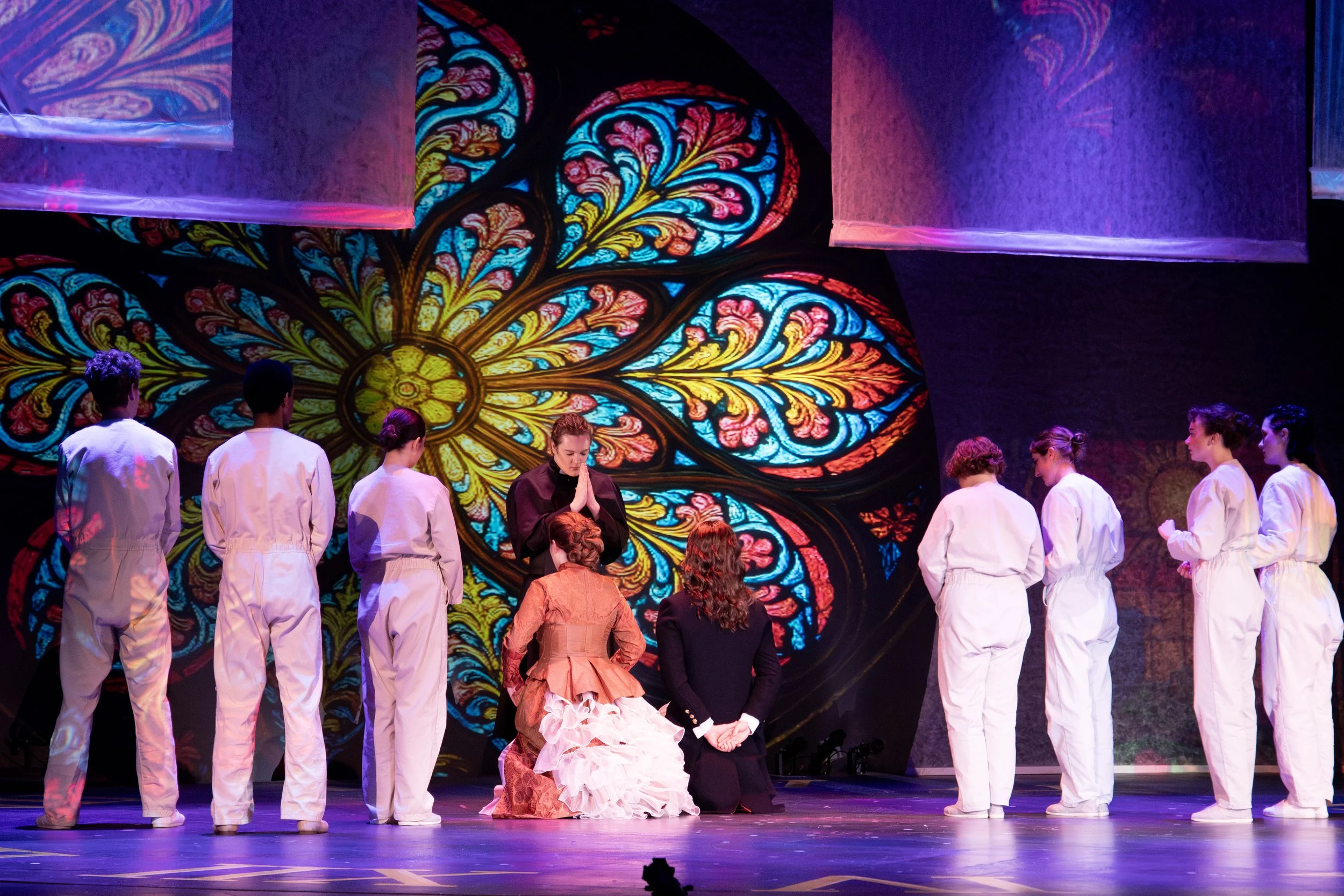
Five minutes later, they are married.
Photo by Alex Oliszewski
-
![The glass shattered. Orlando production photo. Photo by Maranda DeBusk]()
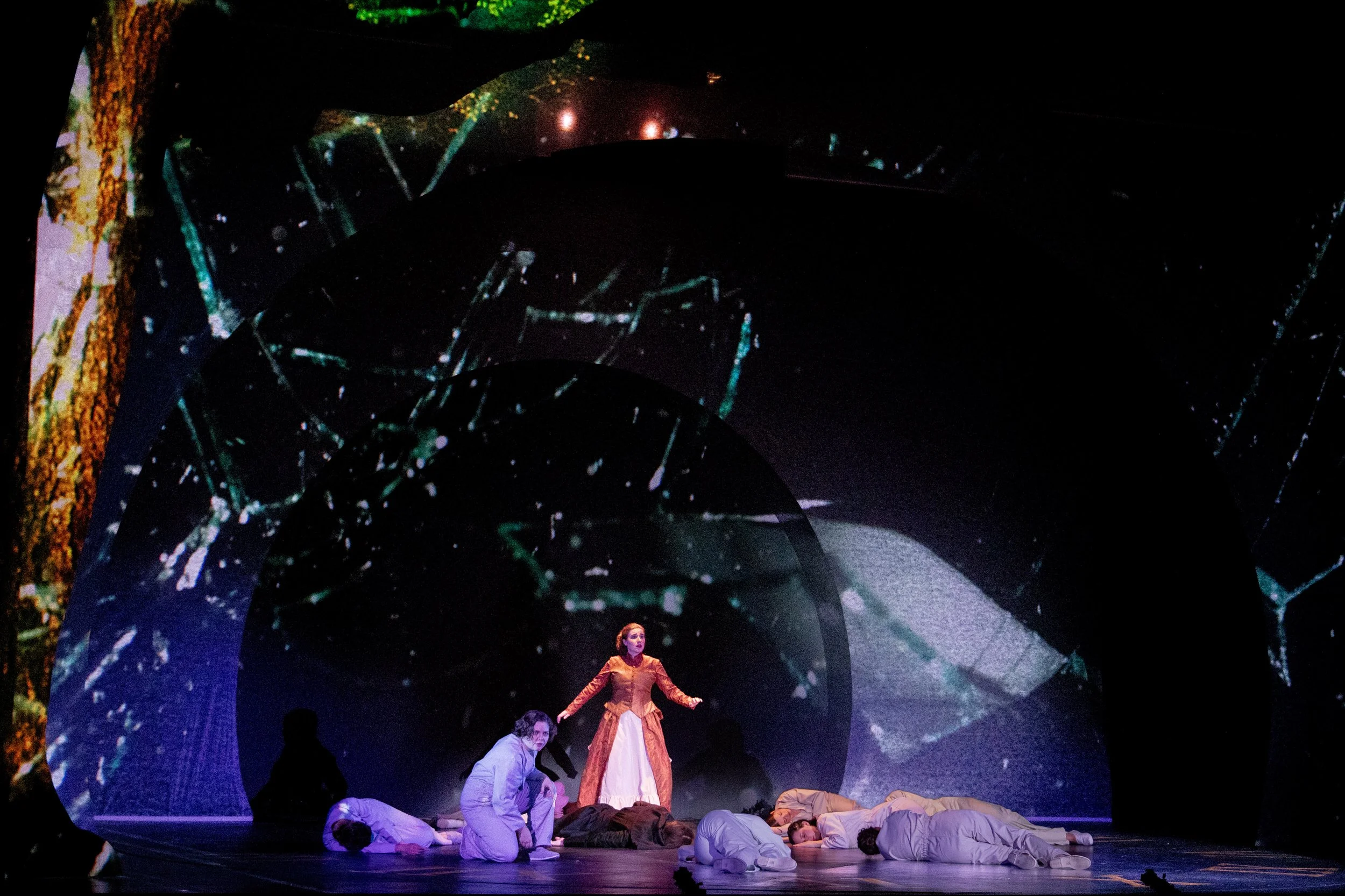
The glass shattered.
Photo by Maranda DeBusk
-
![A Victorian home. Photo by Maranda DeBusk.]()
Orlando returns to a Victorian home.
Photo by Maranda DeBusk
-
![Orlando faces death. Photo by Maranda DeBusk]()
Orlando faces death.
Photo by Maranda DeBusk
-
![Production photo by Maranda DeBusk]()
The Modern Age!
Photo by Maranda DeBusk
-
![Department store elevator. Orlando production photo. Photo by Maranda DeBusk]()
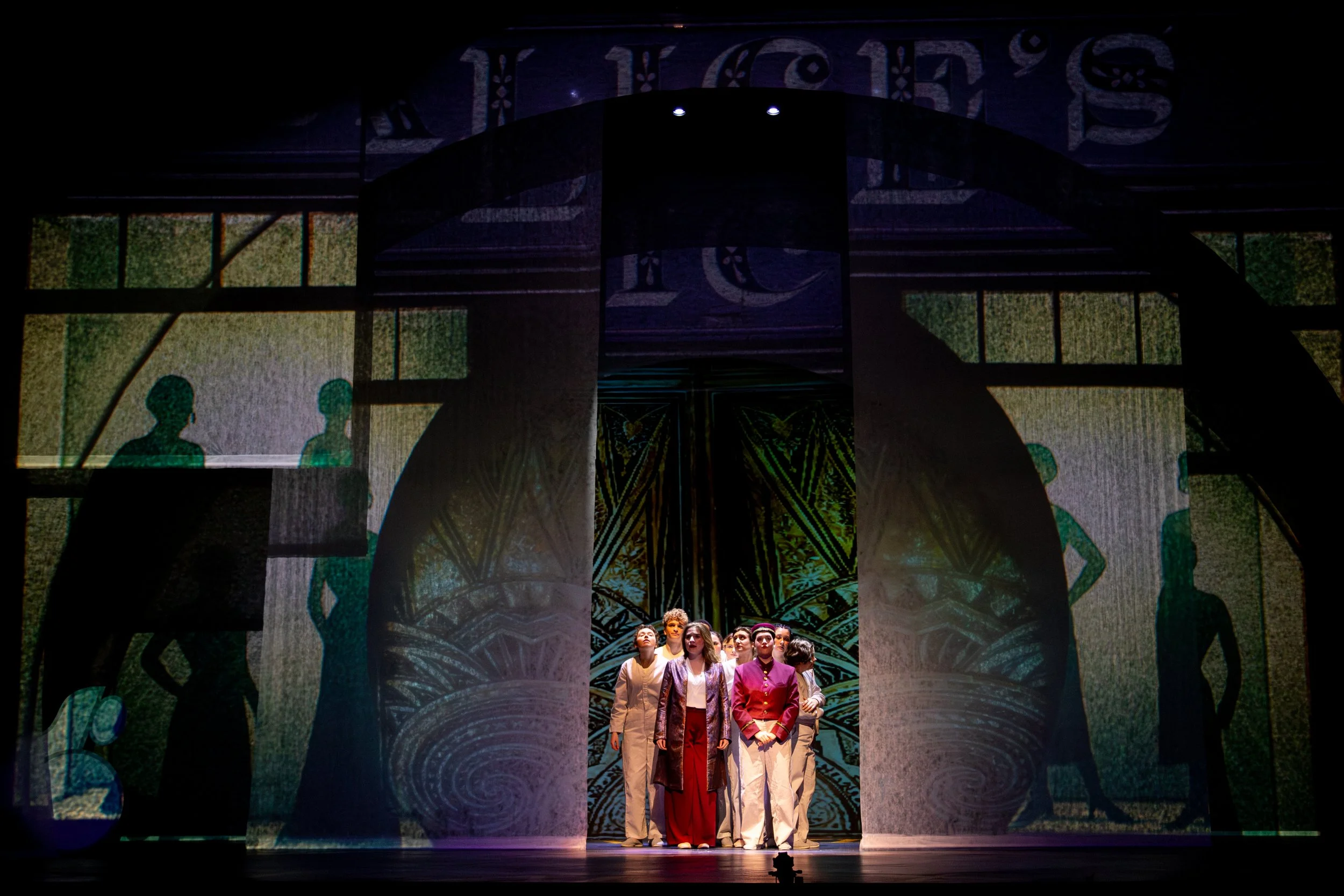
A department store elevator.
Photo by Maranda DeBusk
-
![Production photo from Orlando. Photo by Maranda DeBusk]()
Orlando is haunted by The Queen.
Photo by Maranda DeBusk
-
![Orlando writes a poem. Photo by Maranda DeBusk.]()
Orlando writes a poem.
Photo by Maranda DeBusk
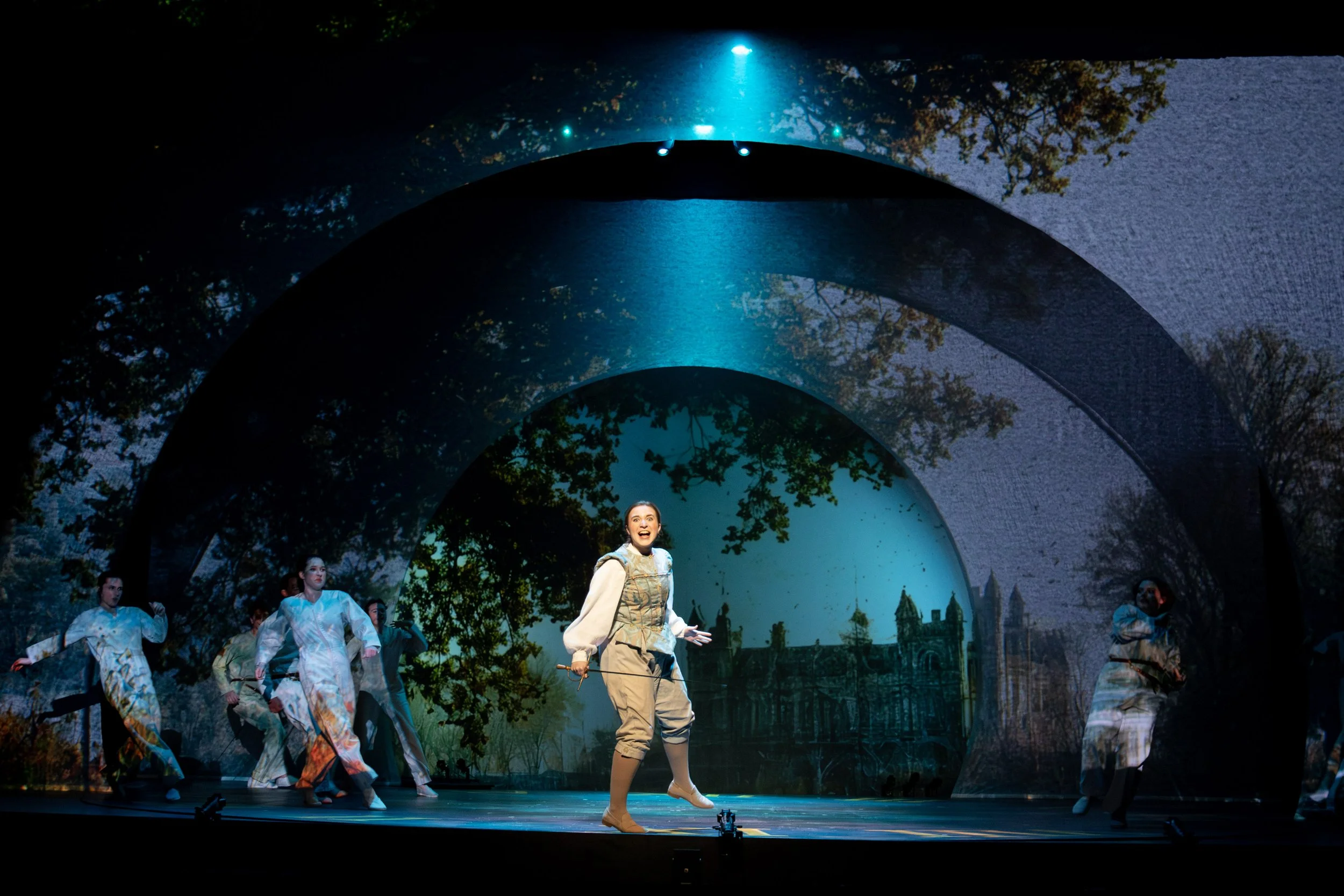
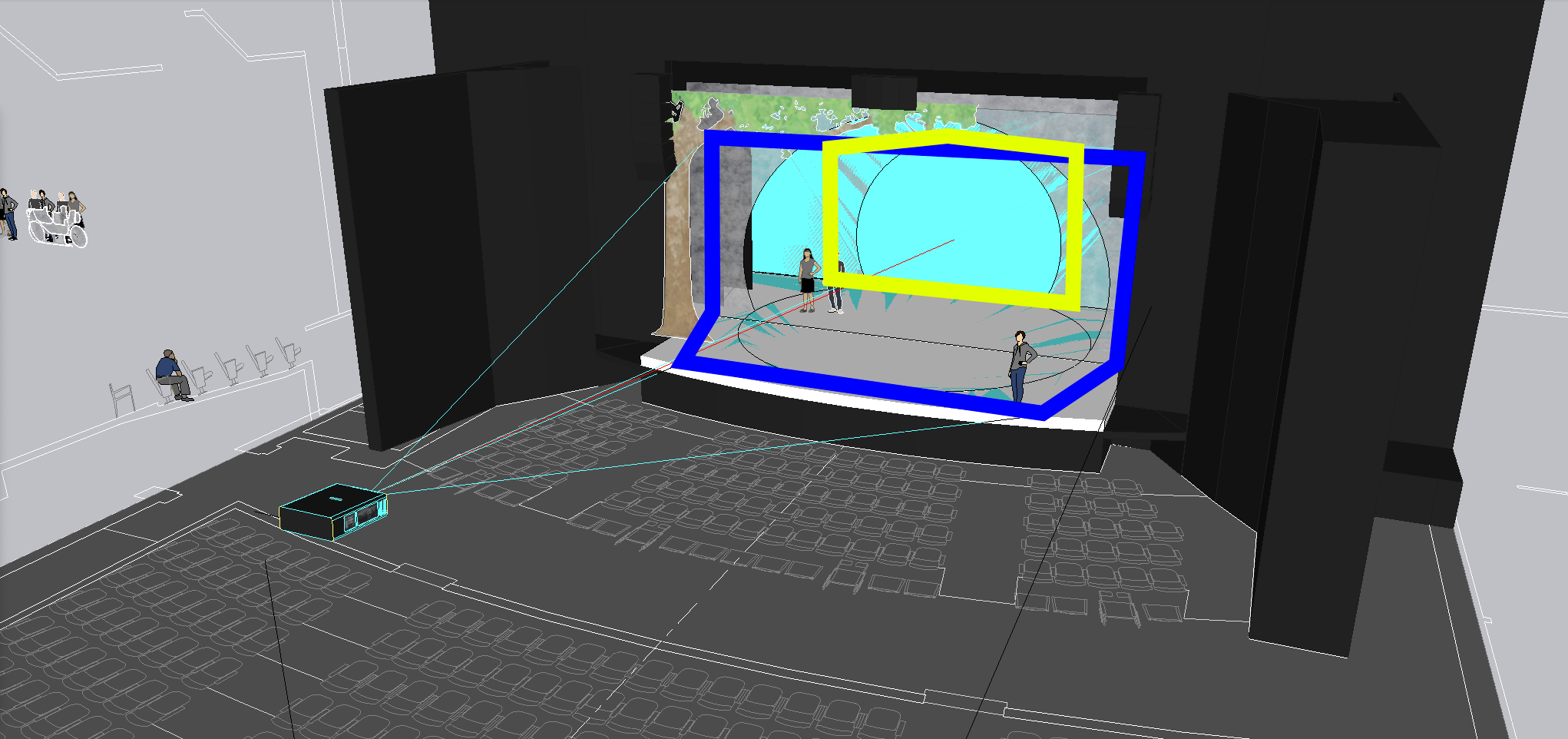
To aid conversations and collaborations with the director and other designers, I produced a set of previsualization demonstrating where the projections would be able to reach on the stage floor and set walls. This helped prepare for installation needs and evaluating the available projector and lens stock.
The blue lines represent the reach of front projection and the yellow lines represent the size and distorted shape of the rear projection.
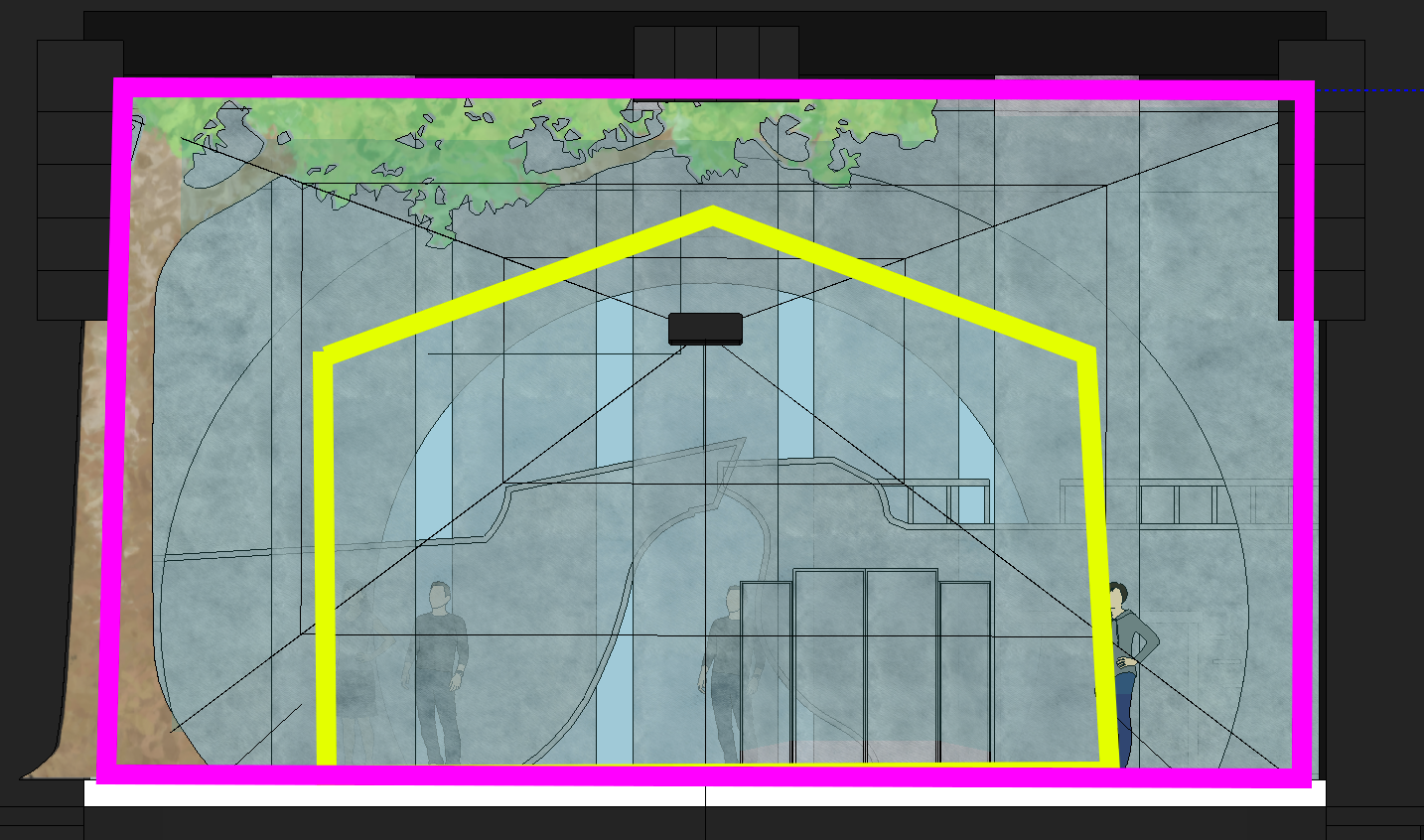
A previsualization of the projection set up for Orlando.
The pink lines represent the size of the front projection with the widest throw lens available. The yellow lines represent the size and shape of the rear projection.