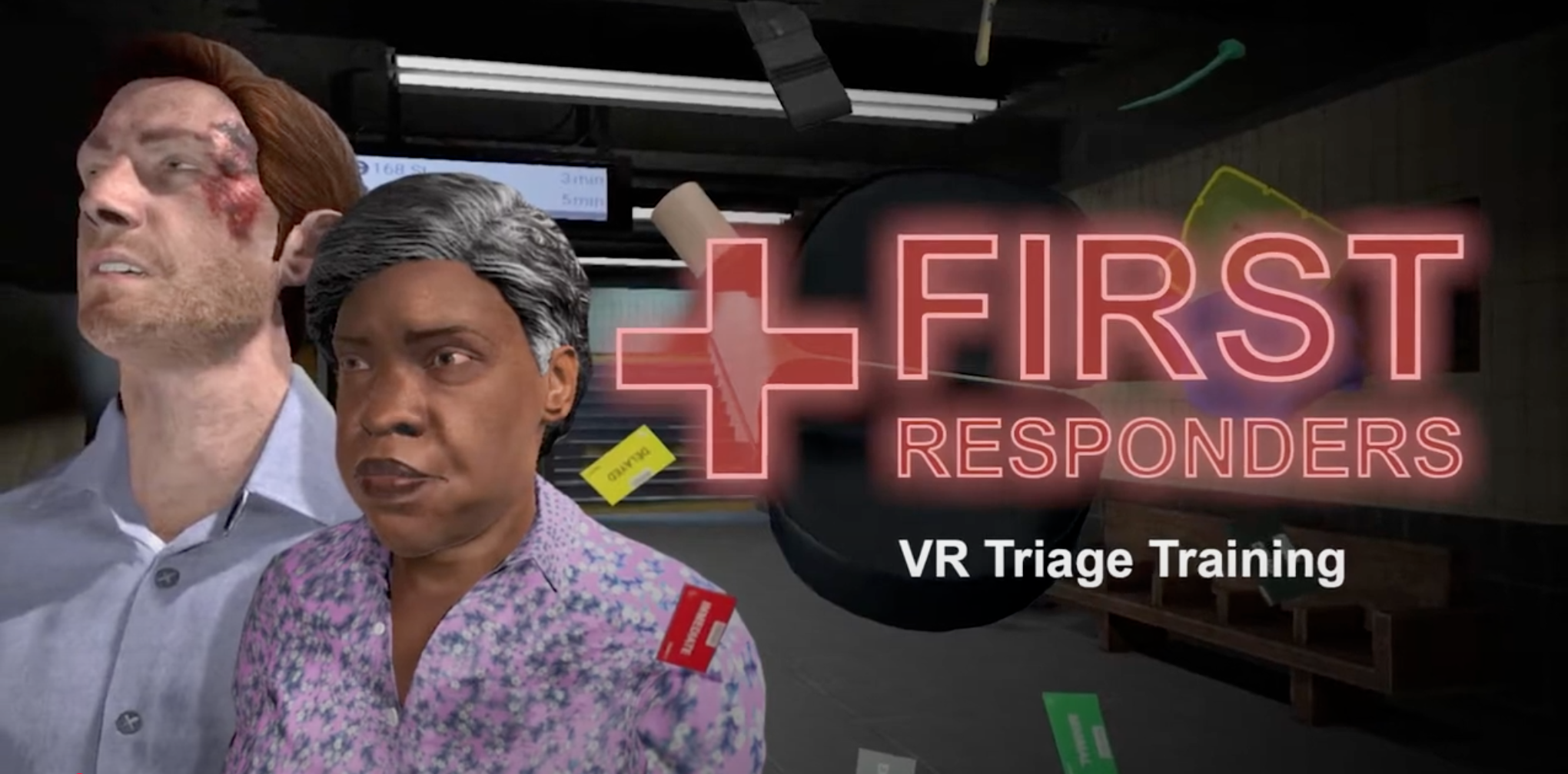
First Responders Virtual Reality Training Simulation: Mass Casualty Incident Virtual Reality (MCI-VR) Triage Training System
2020-present
Principle Investigator: Nicholas E. Kman MD
Co-Principlie Investigators:
Alex Oliszewski MFA
Douglas Danforth PhD
Alan Price MFA
Vita Berezina-Blackburn MA, MFA
Jeremy Patterson BFA
Kellen Maicher MFA
David P. Way MEd
Jillian McGrath MD
Ashish R. Panchal MD, PhD
Katherine Luu MD
Scott Swearingen MFA
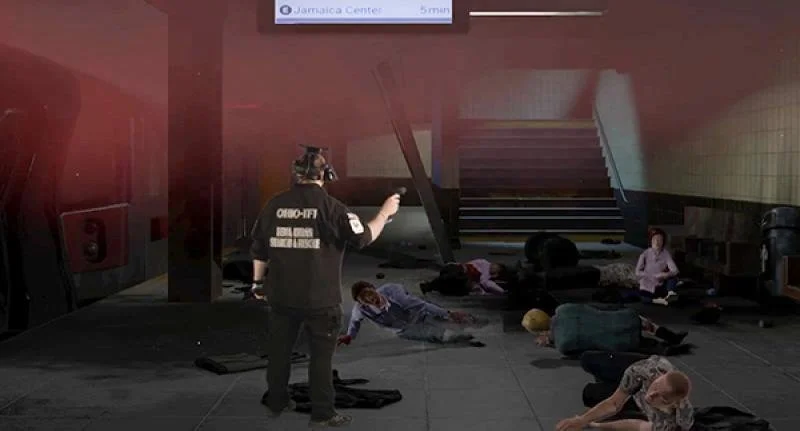
A first responder in training shown is shown in the real-time context of the VR environment they are exploring during a live running version of the simulation.
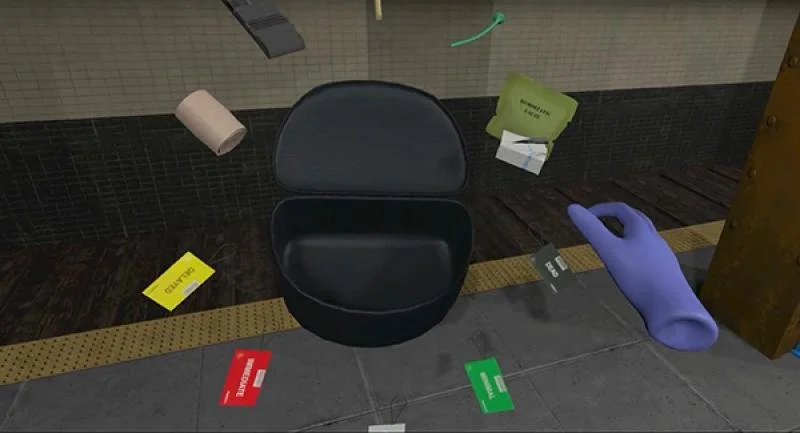
A screenshot of the triage bag interface used in the simulation.
Co-Principal Investigator on a project aimed at enhancing patient safety through the training and evaluation of emergency personnel in response to mass casualty incidents.
First Responder VR: Immersive Simulation for Mass Casualty Training
This project is a strong examples of my core transdisciplinary practice: bringing performance-based media design methods and theatrical expertise into advanced computing environments as a designer, research, performer, and expert collaborator. My contributions help shape how virtual systems feel, sound, and respond — making them more emotionally, cognitively, and techno-dramaturgically resonant. Projects like this and the Dementia Care Project reflect the impact of my transdisciplinary research practice, where performance serves as both a mode of inquiry and a tool for collaborative innovation.
Between 2022–2023, I served as co-investigator on the First Responder Virtual Reality Simulator, an immersive training tool developed to help emergency personnel practice triage and treatment during simulated mass casualty incidents. Built in Unity and based on the SALT triage protocol, the system features autonomous virtual patients, dynamic environments, and real-time performance feedback. More than 530 trainees—including paramedics, medical students, and residents—used the system, with participants highlighting its realism, interactivity, and the value of managing multiple patients in a high-stress scenario.
I led the sound design and performance for the project, organizing and engineering all voice assets, directing performances, and performing as a voice actor myself to shape the emotional realism of the virtual patients. I also consulted and contributed interface design for the triage kit.
This project extends the long-term and on going VR transdisciplinary performance research I’ve been conducting with Vita Berezina-Blackburn on Performance and Narrative in Virtual Reality at the Advanced Computing Center for the Arts and Design.
For our publications and more information please refer to the following links:
First Responder Virtual Reality Simulator to train and assess emergency personnel for mass casualty response by Nicholas E. Kman MD et. alia.
New virtual reality program simulates disaster triage by Evan Drexler, Ohio State News
EMS using virtual reality triage by Gary Budzak, The Delaware Gazette
OSU College of Medicine using VR to provide disaster response training for students by Jerrod Clay, FOX 28
OSU developing virtual reality training for first responders by Dennis Biviano, Spectrum News 1